The documents needed for international travel fit on one short list: a passport that’s valid long enough, any entry permit your destination asks for, travel insurance, and your bookings, with a copy of each on your phone. The rules below are for US citizens and hold as of October 25, 2026.
- Schengen area
- 3 months
- Passport validity after the day you leave Europe
- Many other countries
- 6 months
- Validity they ask for, counted from arrival or departure
- UK ETA
- £20
- The price to visit Britain since April 8, 2026
What documents do you need to travel internationally?
A valid US passport book for every flight abroad, plus whatever your destination asks for: a travel authorization or visa, and sometimes a vaccination certificate or a driving permit.
| Document | When you need it |
|---|---|
| US passport book | Every international flight |
| Travel authorization or visa | Depends on the country (the UK: an ETA) |
| Bookings and boarding passes | Every trip |
| Travel insurance | Not always required, always worth it |
| International Driving Permit | If you’ll drive abroad |
| Yellow fever certificate | Some countries in Africa and South America |
| REAL ID or passport | Flights within the US |
The passport card doesn’t count for flights abroad: it only works by land and sea to Canada, Mexico, Bermuda, and some Caribbean countries.
How long does your passport need to be valid?
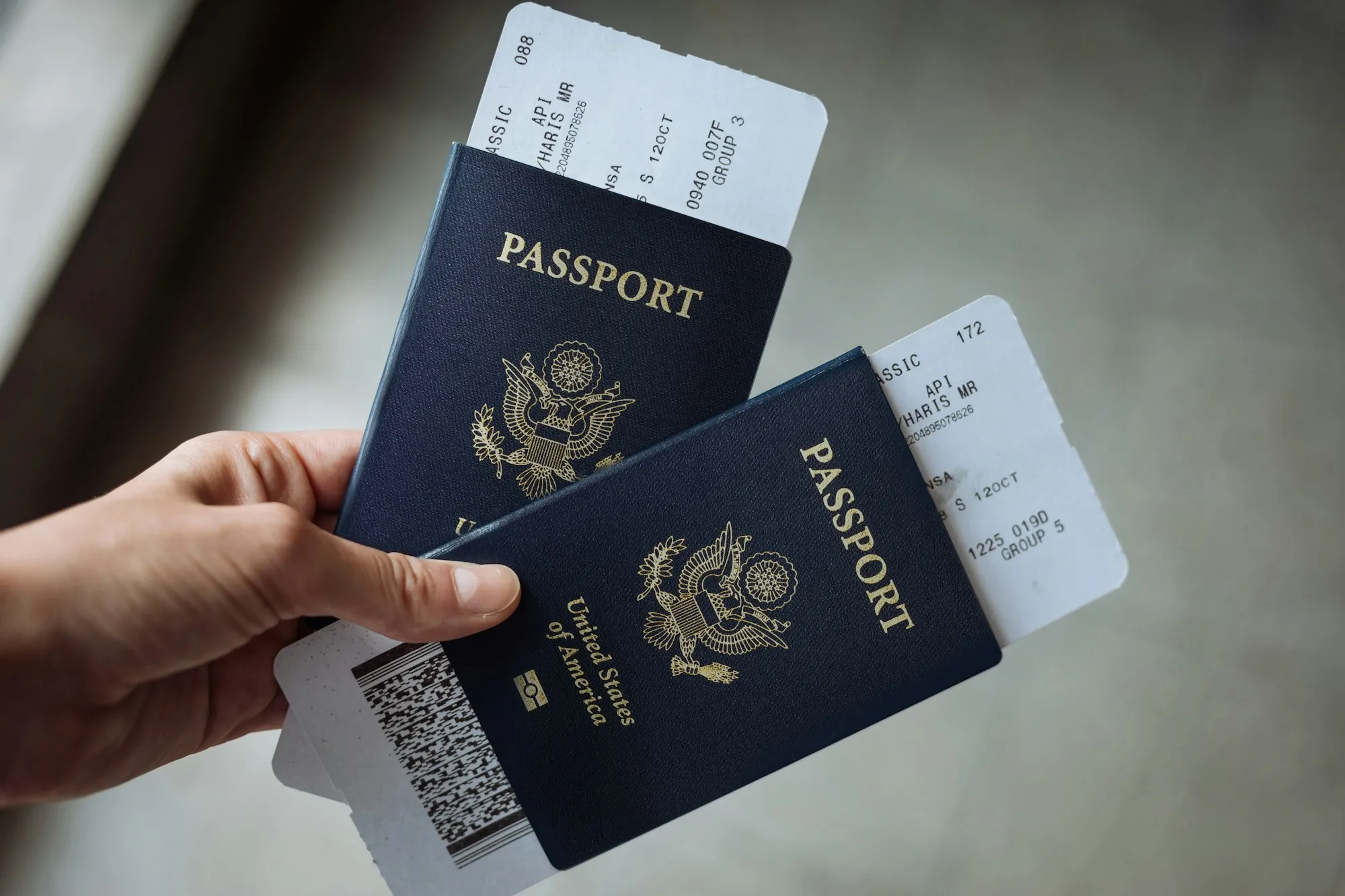
For Europe’s Schengen area, at least three months after the day you leave, and issued within the last 10 years. Many other countries want six months.
 Global Residence Index · Unsplash
The State Department warns that some countries, especially in Europe, ask for six months beyond your trip, and airlines sometimes apply the stricter rule at check-in. Check the expiration date when you book the trip, not the night before: a routine renewal takes weeks.
Renewing by mail (form DS-82) costs $130. A first passport (DS-11) is $130 plus a $35 acceptance fee, and expedited service adds $60, according to the State Department’s fee chart for October 2026.
REAL ID for the domestic legs
If your trip starts with a flight inside the US, you need a REAL ID–compliant license or your passport at the TSA checkpoint. Enforcement began on May 7, 2025.
| ID | Domestic flights | Flights abroad |
|---|---|---|
| REAL ID license | Yes | No |
| Passport book | Yes | Yes |
| Passport card | Yes | No |
| Apple Wallet Digital ID | At select checkpoints | No |
| No acceptable ID | $45 TSA ConfirmID | No |
Since February 1, 2026, adults without an acceptable ID pay $45 for TSA ConfirmID, valid for 10 days, and can still be turned away. A Digital ID made from your passport in Apple Wallet is not a substitute for the passport at a border.
Do you need an ETA or ETIAS?
For the UK, yes: an ETA, £20. For the Schengen area, not yet: ETIAS isn’t running and has no start date. The ESTA you may have heard of is the US version, for foreign visitors; as a US citizen you don’t need one.
| Where | What you need | Cost |
|---|---|---|
| United Kingdom | An ETA, before you fly | £20 |
| Schengen area | Your passport; EES at your first entry | Free |
| Schengen, later | ETIAS, once it starts | €20 |
| Japan | Your passport (no visa for tourists) | Free |
Americans have needed the UK’s ETA since January 8, 2025. It lasts two years or until your passport expires, for stays of up to six months; apply on gov.uk or in the UK ETA app (gov.uk warns that other sites charge more). Going to London? See 3 days in London.
Europe’s Entry/Exit System (EES) has been fully running since April 10, 2026. Instead of a stamp in your passport, your fingerprints and a photo of your face are recorded at your first entry into one of the 29 countries that use it (Cyprus and Ireland, which don’t, still stamp passports). There’s nothing to apply for, but expect a longer line the first time.
ETIAS will cost €20 and last three years or until your passport expires, for 90 days in any 180. The EU says it will announce the start date several months ahead, so for now you need nothing beyond your passport. Going to Japan? See what to know before traveling to Japan.
 Daniel Schludi · Unsplash
Travel insurance and vaccination certificates
Check what your health plan covers abroad, and buy travel medical insurance for what it doesn’t. Carry the policy number and the insurer’s 24-hour phone line with your documents.
The only vaccination certificate commonly checked at borders is for yellow fever, in some countries in Africa and South America, often when you arrive from a country where the disease is present. The certificate, known as the yellow card, is valid for life, from 10 days after the shot.
Do you need an International Driving Permit?
Only where your US license isn’t enough on its own. In the US, only AAA and the American Automobile Touring Alliance (AATA) are authorized to issue one; the Federal Trade Commission warns that others selling them are scams.
 Robert Bant · Unsplash
Japan is the strict case: it accepts only the 1949 Geneva permit, as a paper booklet (not a card, not an app), together with your license, for one year from your arrival. For any other country, check its page on travel.state.gov before you book the car.
Bookings, boarding passes, and cards
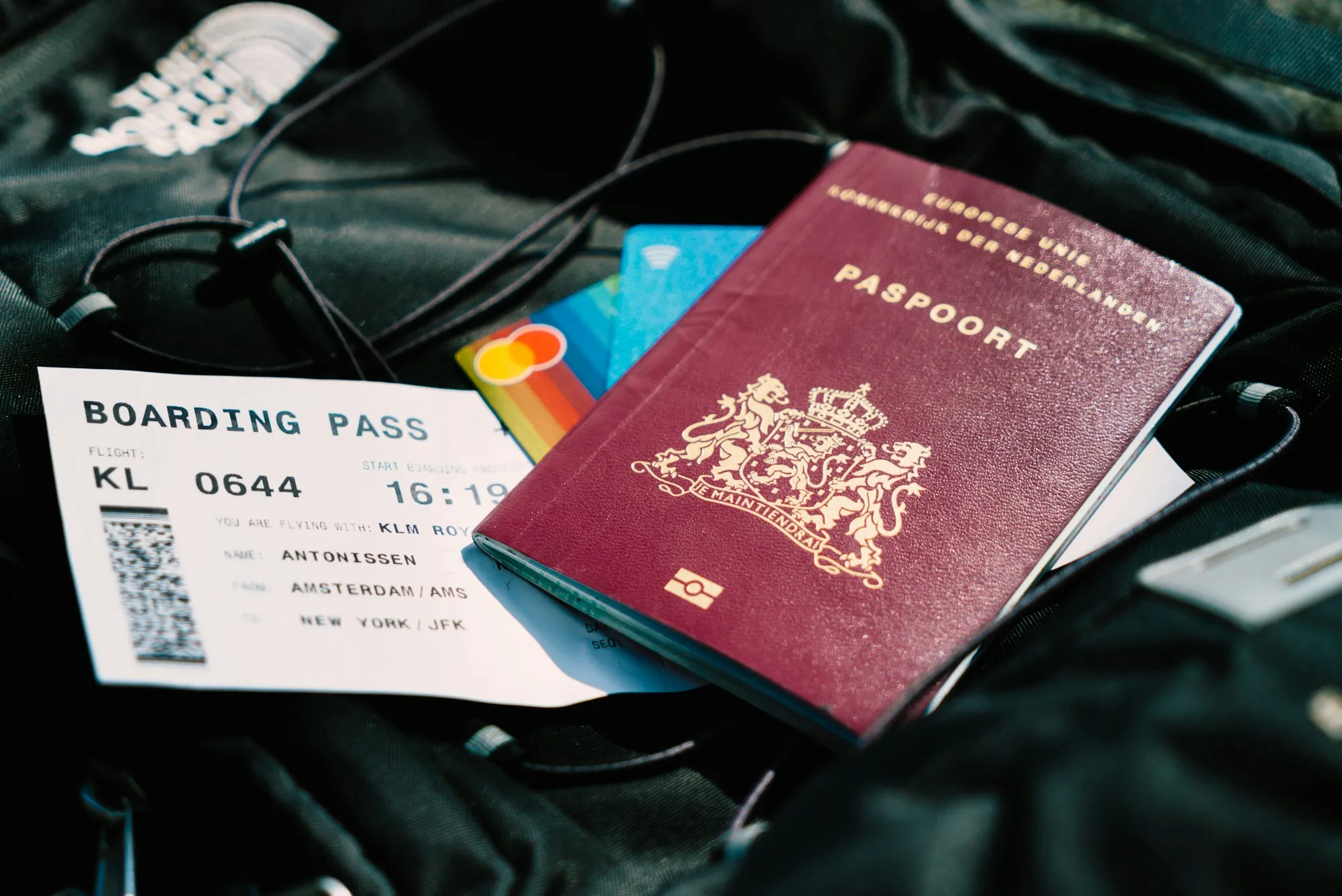
The name on your ticket must match the one on your passport. Keep your return ticket and your first hotel reservation at hand: border officers can ask to see them.
 CardMapr.nl · Unsplash
For your cards, write down each bank’s emergency phone number, not the card numbers. That’s the number you’ll call to cancel a lost or stolen card while you’re away.
How to keep copies of your documents on your phone
Photograph your passport’s photo page, your ETA, your driver’s license and driving permit, your insurance policy, and your bookings, and keep them on your phone where they open without a signal. Then keep one paper copy separate from the originals, and leave one set with someone at home, as the State Department advises.
A copy never stands in for the passport at a border or at check-in, but it makes a lost passport faster to replace.
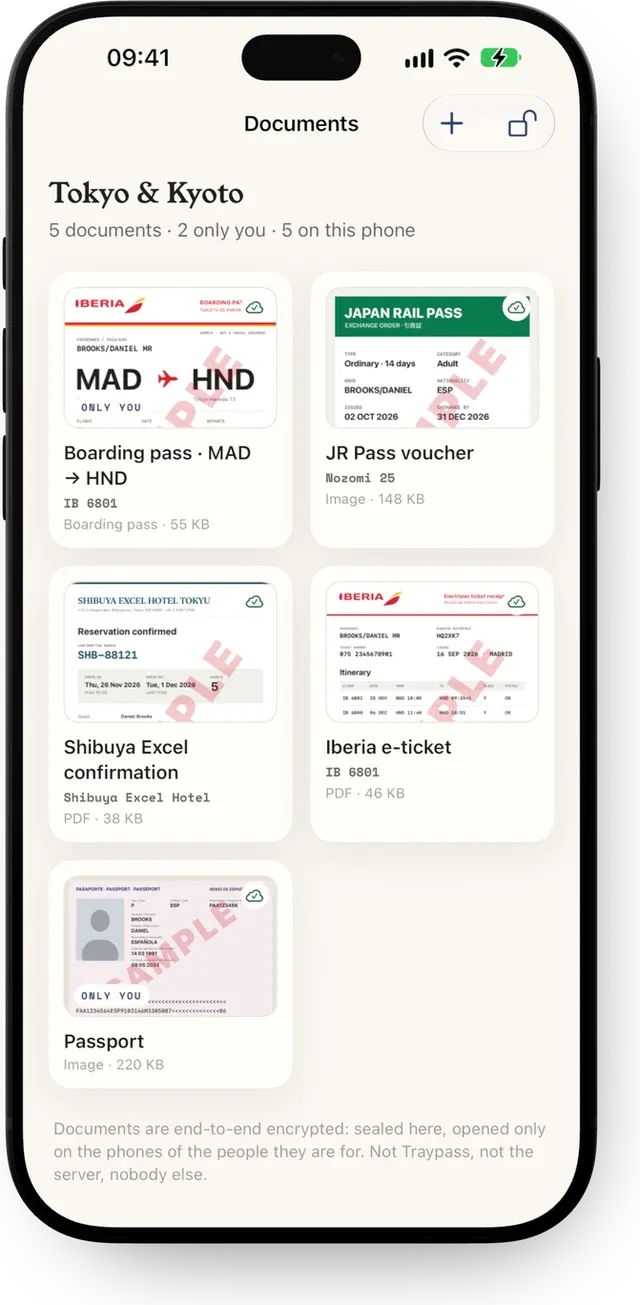
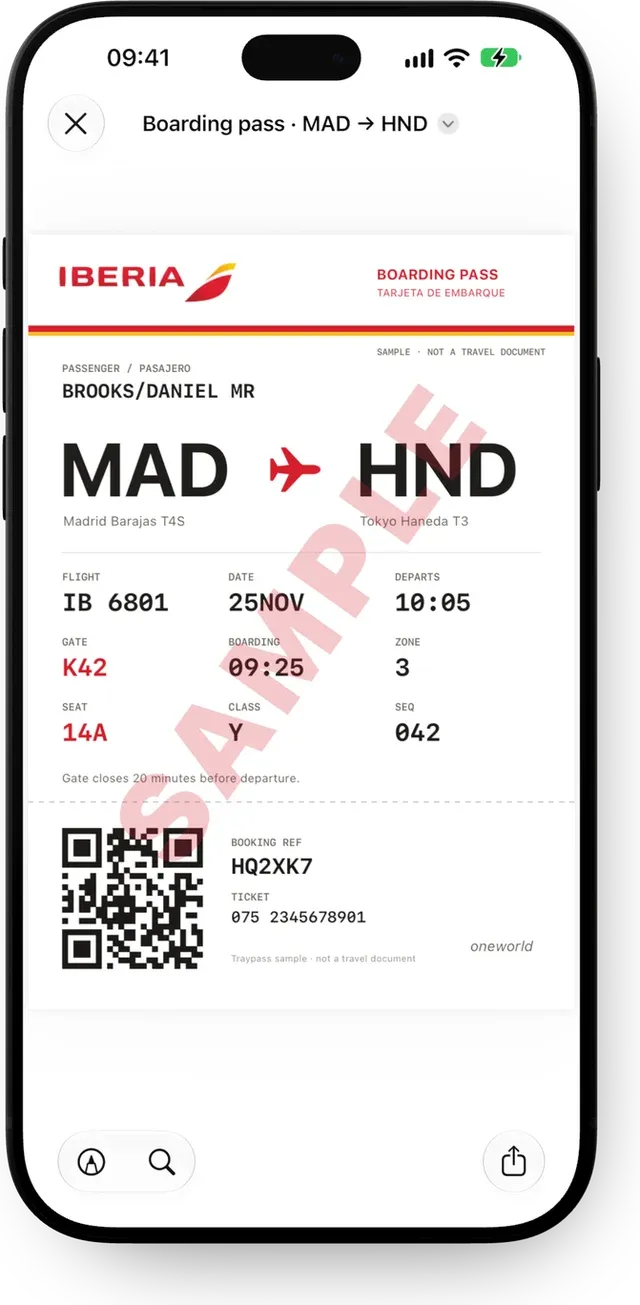
In Traypass, each of your travel documents sits under the flight or the stay it belongs to, and is encrypted on your iPhone before it’s uploaded. In this sample trip to Tokyo and Kyoto, the boarding pass and the passport are marked Only you; the hotel confirmation and the rail pass are shared with everyone on the trip. Everything is saved on the phone and locked with Face ID, and at the gate the boarding pass opens full screen, even without a signal. The free plan holds five documents per trip.
Register your trip with STEP
Enroll in STEP, the State Department’s Smart Traveler Enrollment Program, at step.state.gov. It’s free, sends you the embassy’s alerts, and lets the embassy reach you or your emergency contact. Write down the address of the nearest US embassy or consulate while you’re at it.
What to do if you lose your passport abroad
Report it to the local police, then go in person to the nearest US embassy or consulate. If you need to travel soon, ask for an emergency passport.
 James Kenny · Unsplash
Bring forms DS-64 (lost or stolen) and DS-11 (filled out, but don’t sign it until you’re asked to), one passport photo, proof of citizenship, a copy of the lost passport if you have one, a photo ID, and the fee. Once you report it, the old passport is no longer valid for travel, even if it turns up.
An emergency passport is valid for a limited time, a year at most. Not every country takes it: France, for one, doesn’t accept it for visa-free entry, only for transit straight home to the US. The State Department’s 24-hour line is +1-202-501-4444.
 TraypassApp Store