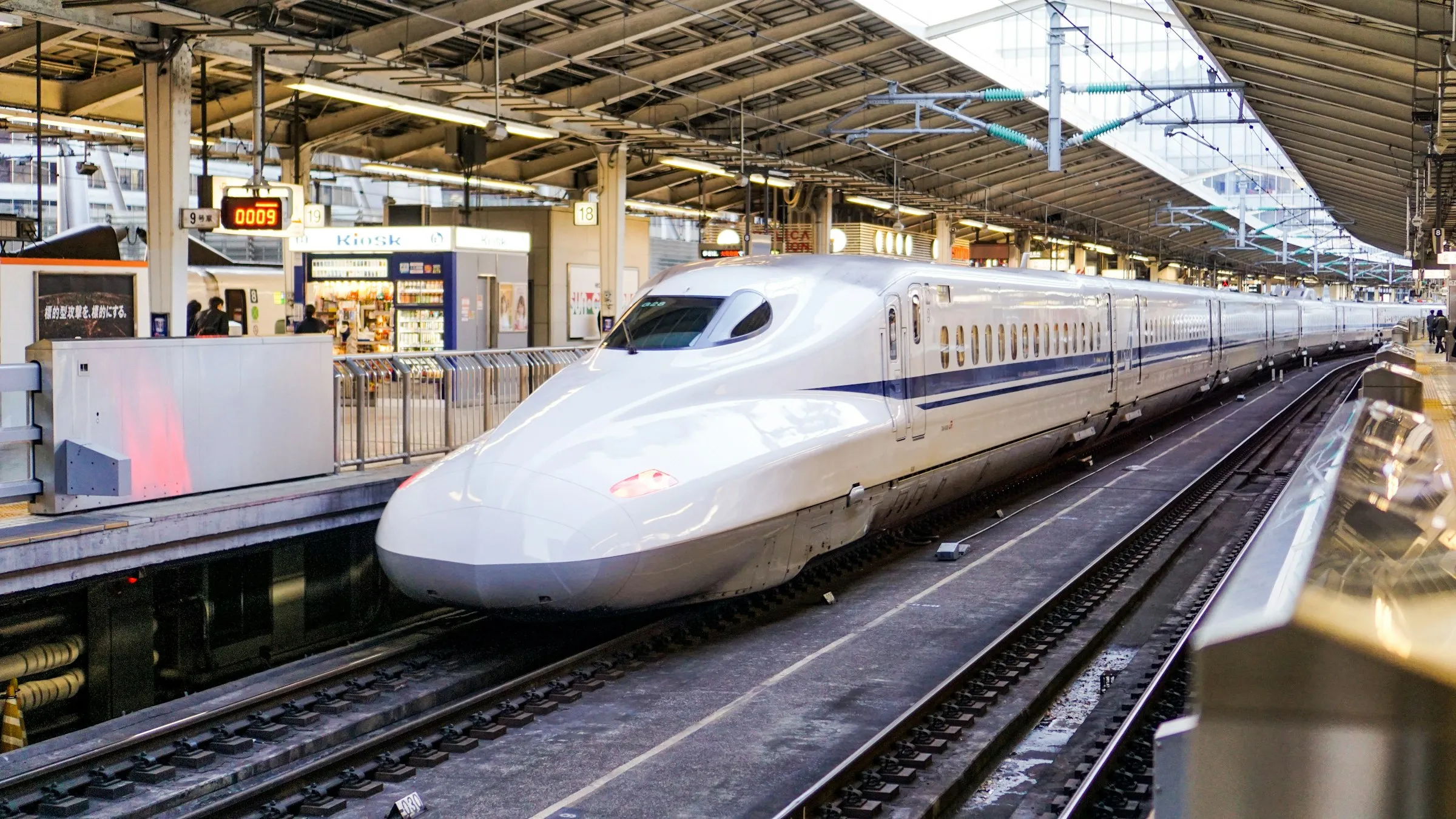
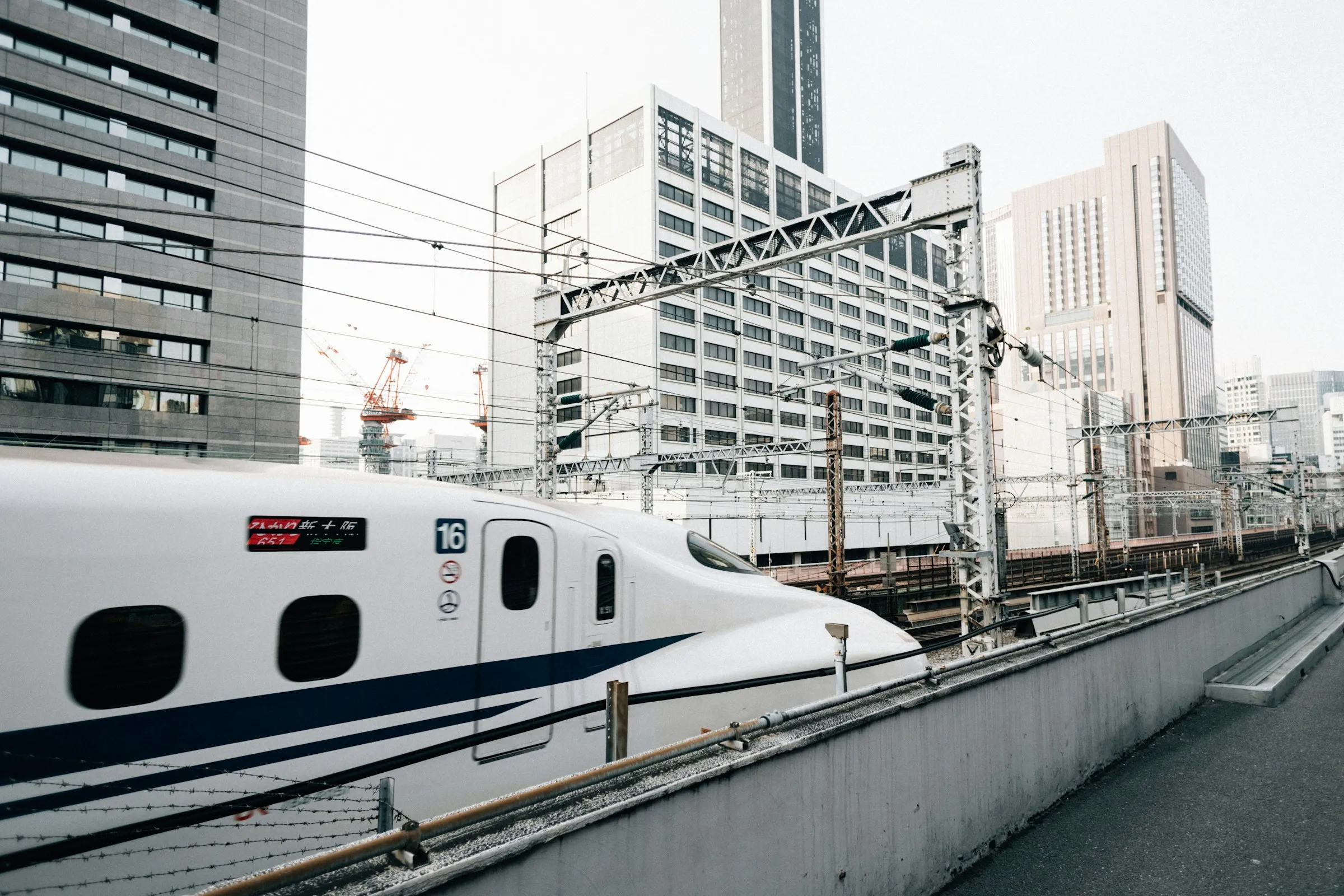
The Tokyo to Kyoto bullet train, the Tokaido Shinkansen, takes about 2 hours 15 minutes on a Nozomi and costs about ¥14,000 (about $89) one way. It runs from city center to city center, with no airport and no check-in, and trains leave every few minutes through the day. The only choices are which train, where to sit and what to do with your bags.
- Nozomi, Tokyo to Kyoto
- 2 h 15
- Hikari 2 h 40, Kodama 3 h 40
- Reserved seat, one way
- ¥13,970
- About $89, in the smartEX app
- The seat for Mount Fuji
- E
- Right side going to Kyoto
Nozomi, Hikari or Kodama?
Take the Nozomi: it is the fastest and costs only a few hundred yen more than the Hikari. The three are the same trains inside; what changes is how often they stop. A night bus or a flight to Osaka’s Itami airport saves little: the bus takes most of a night, and Kyoto has no airport of its own.
| Tokyo → Kyoto | smartEX app | Ticket machine | Rail Pass | |
|---|---|---|---|---|
| Nozomi | 2 h 15 | ¥13,970 · $89 | ¥14,170 · $90 | Extra ticket |
| Hikari | 2 h 40 | ¥13,650 · $87 | ¥13,850 · $88 | Included |
| Kodama | 3 h 40 | ¥13,650 · $87 | ¥13,850 · $88 | Included |
| Non-reserved seat | Same trains | ¥13,320 · $85 | ¥13,320 · $85 | Included |
 Tsuyoshi Kozu · Unsplash
Prices are for one adult in a standard (ordinary) car in regular weeks, in yen at ¥157 to the dollar, the European Central Bank rate on October 30, 2026. In quiet weeks the smartEX price is ¥200 lower, in busy weeks ¥200 higher, and on the busiest days ¥400 higher. The smartEX app is cheaper than the machine and the counter by ¥200 on a reserved seat. A Green Car seat on a Nozomi is ¥18,840 (about $120) in the app.
In peak weeks every Nozomi seat is reserved, and a non-reserved ticket only lets you stand: November 21 to 23, December 25 to January 5, January 9 to 11 and March 20 to 22, 2027. Book ahead for those dates. One rise is announced: for tickets bought from July 1, 2027, the Nozomi reserved-seat price goes up by ¥700 between Tokyo and Kyoto (to about ¥14,870 at the counter). Non-reserved seats stay as they are.
Does the Japan Rail Pass cover the Nozomi?
No. The Rail Pass covers the Hikari and Kodama but not the Nozomi or the Mizuho. A pass holder can still ride the Nozomi with a special ticket, ¥4,960 (about $32) between Tokyo and Kyoto, bought at a JR ticket machine or office up to one month ahead. The Hikari takes about 25 minutes longer and costs nothing extra.
| Tokyo → Kyoto with a pass | Extra ticket |
|---|---|
| Hikari, Kodama | None |
| Nozomi | ¥4,960 · $32 |
Whether the pass pays at all is a separate question: a Tokyo–Kyoto round trip costs about ¥27,300 to ¥27,900, and a 7-day pass is ¥50,000 on the official website. Its prices, how to buy it and the tax-free rules are in what to know before traveling to Japan. Seats can be reserved in advance only with a pass bought on the official website; the smartEX app does not book pass seats.
Where the train stops
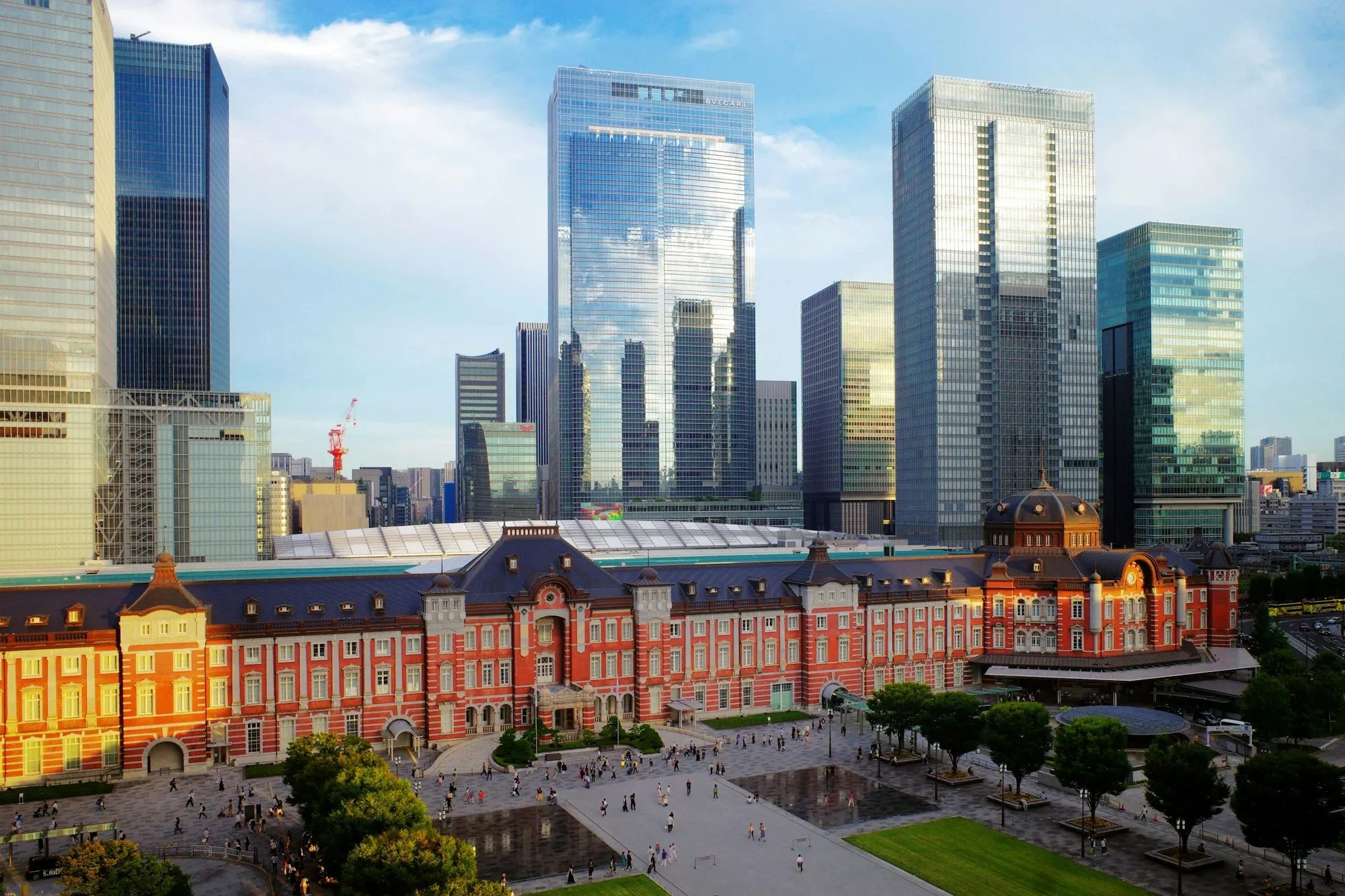
A Nozomi stops at Shinagawa, Shin-Yokohama and Nagoya before Kyoto, then goes on to Shin-Osaka. If your hotel is in the south or west of Tokyo, boarding at Shinagawa saves the ride to Tokyo Station.
- Tokyo StationStart of the line; Shinkansen platforms 14 to 19
- ShinagawaAbout 7 minutes from Tokyo; handy from Shibuya and Haneda
- Shin-YokohamaAbout 18 minutes from Tokyo
- NagoyaAbout 1 h 35 from Tokyo
- Kyoto StationAbout 2 h 15 from Tokyo
 Dmitrijs Tokyo · Unsplash
How do you buy the ticket?
Use the smartEX app, a ticket machine or a JR ticket office; all three work in English. The app is the cheapest and the easiest.
- The smartEX app is JR Central’s own, in English. You register once with a credit card, pick the train and the seat on a seat map, and board with a QR ticket or with a Suica or other IC card you have registered in the app. Booking opens a year ahead, and changing the train costs nothing, as often as you like, until 4 minutes before it leaves.
- Ticket machines at the station have an English menu and take cards and cash. This is also where a Rail Pass holder buys the Nozomi ticket.
- JR ticket offices (Midori-no-madoguchi), the staffed counters, are for anything unusual: a group, a pass, a question. The line at Tokyo Station can be long in the morning.
Outside the peak weeks above, you can usually buy on the day. At machines and counters, seats go on sale a month ahead.
Which seat for Mount Fuji?
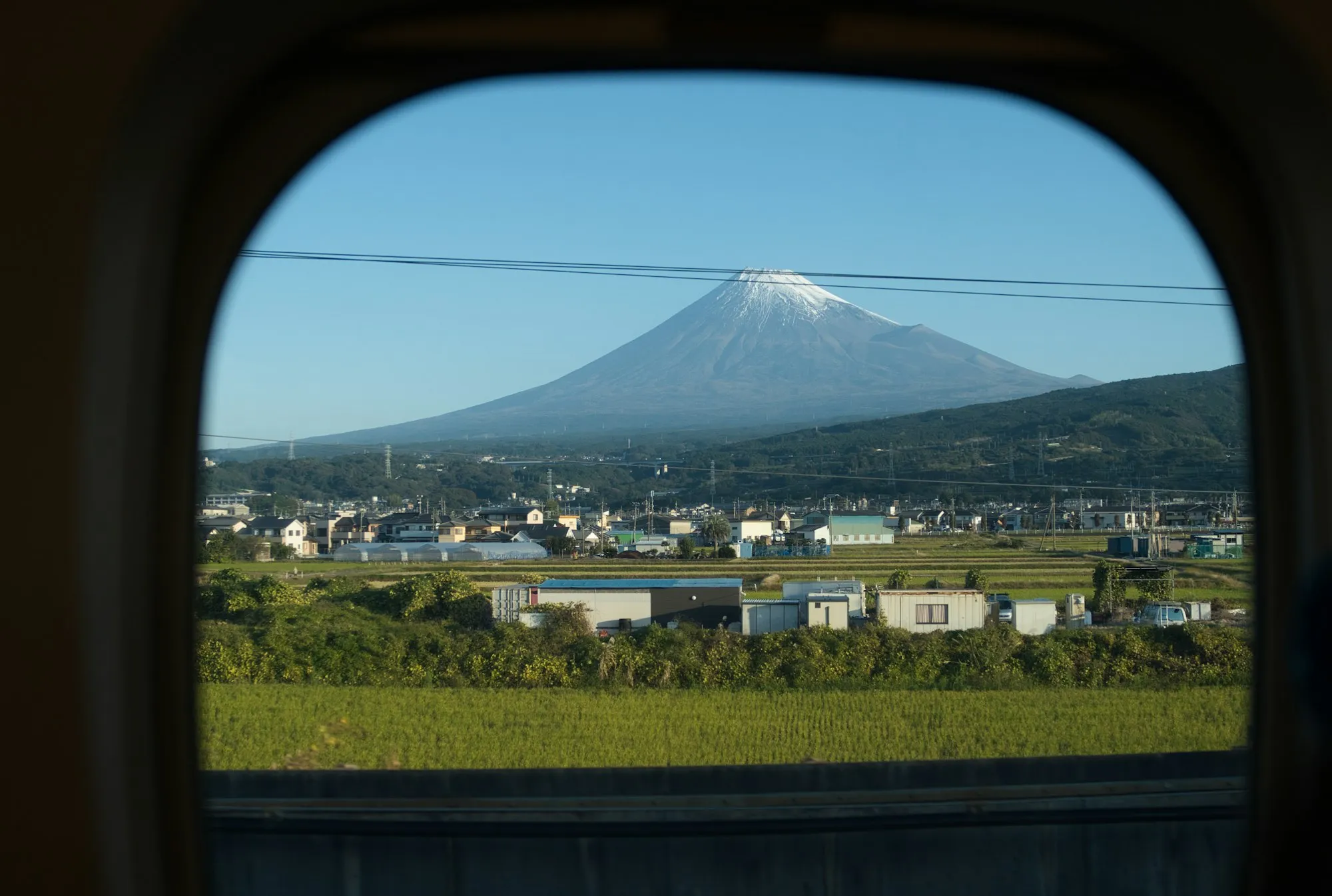
Seat E, on the right going from Tokyo to Kyoto. An ordinary car has three seats on one side (A, B, C) and two on the other (D, E), and the two-seat side is the one facing Fuji. In a Green Car, with two seats on each side, the right-hand window is seat D.
 Yu · Unsplash
Pick the seat on the map when you book in the app. The mountain shows for a few minutes around Shin-Fuji station, about 40 to 50 minutes after Tokyo. It is often hidden in cloud or haze, more in summer; cold, clear mornings give you the best chance. Going back to Tokyo, Fuji is on the left: seat A.
What about big suitcases?
A bag of 160 cm or less (length + width + height, about 63 inches) needs nothing special. From 161 cm up to 250 cm (98 inches), you must reserve a seat with an oversized baggage area, the last row of some cars, where the space behind the seats is shared by that row. It costs nothing extra, but only some cars have these seats, so book it with your ticket. There are none in non-reserved cars.
Bring a bag that size without the reservation and you pay ¥1,000 (about $6); the conductor tells you where to put it, and if the train is full you may be asked to take a later one. A bag over 250 cm does not go on at all. Most medium checked suitcases are under 160 cm: add the three sides before you worry. Or ask your Tokyo hotel to forward the bag to your Kyoto one.
The train in your trip
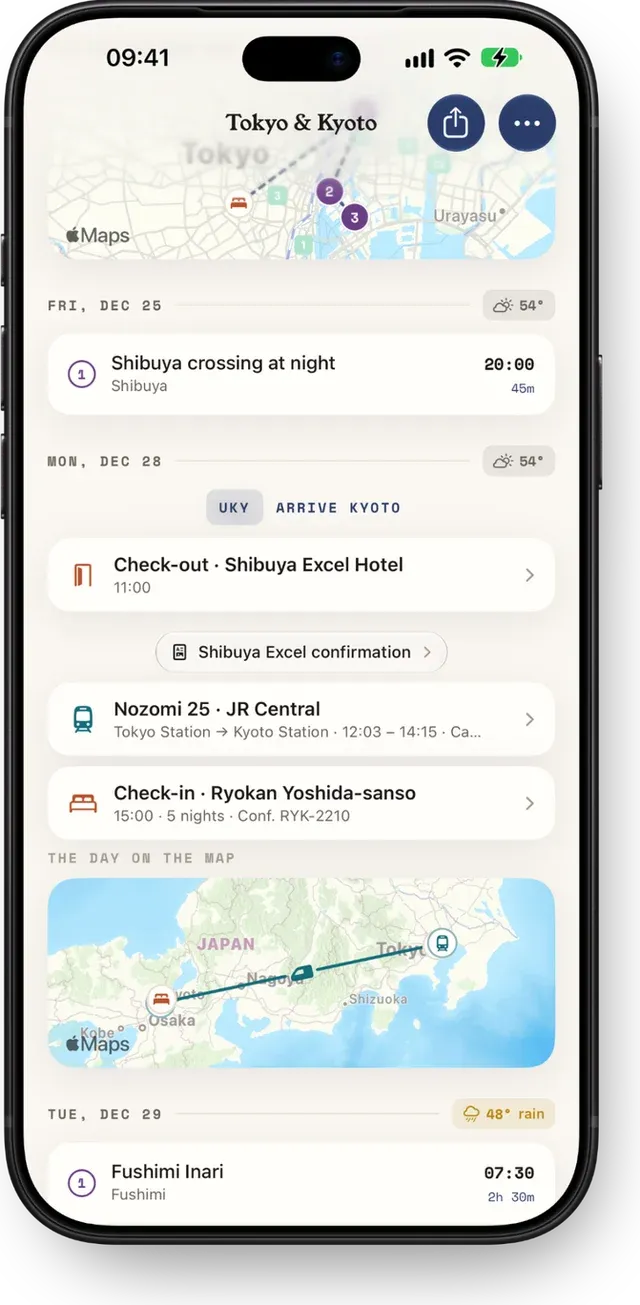
The ride is easy; the day around it is what needs a plan. The Tokyo hotel wants you out by 11:00, the Kyoto one lets you in at 15:00, and the train fills the gap in the middle.
In this sample trip, the travel day reads in order: check-out at the Shibuya Excel Hotel at 11:00, the Nozomi 25 from Tokyo Station at 12:03 (it arrives at 14:15, the sample’s own train), and check-in at the Ryokan Yoshida-sanso at 15:00 for five nights. Under it, the day’s map draws the line from Tokyo to Kyoto. Leave about 45 minutes to get from Shibuya to the platform at Tokyo Station with bags.
The train fits into a full plan of the trip, with Tokyo days and Kyoto days on either side, in the itinerary planner.
How do you get out of Kyoto Station?
The Shinkansen platforms are on the south side of the station, and the city center is to the north: follow the signs to the Karasuma central exit, a five-minute walk through the station.
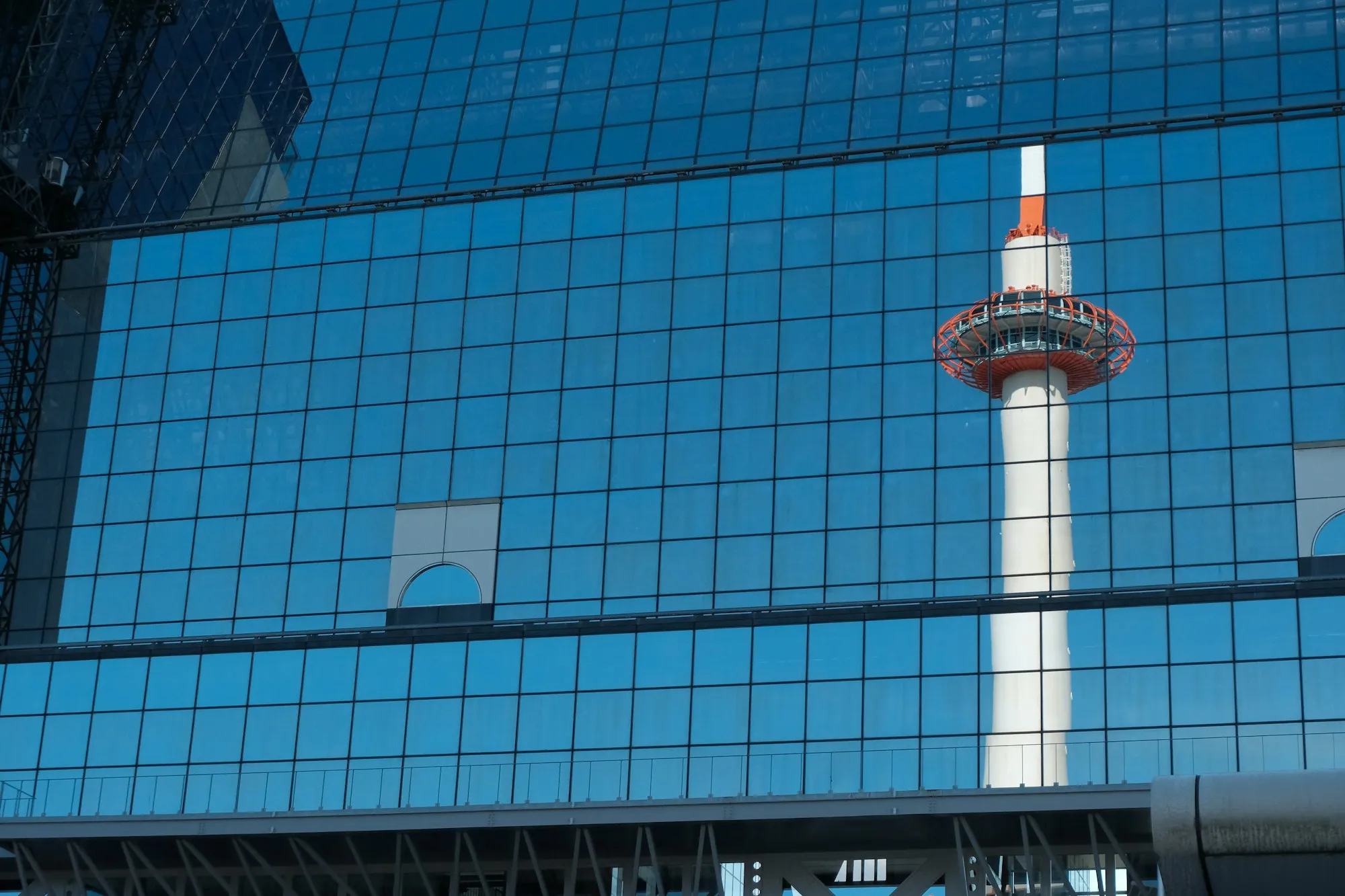 Hotaria N · Unsplash
- Subway: the Karasuma line runs north from under the station to Shijo and Karasuma Oike, the center, in about five minutes.
- Buses: the bus terminal is in front of the Karasuma exit. Buses 100 and 206 go toward Kiyomizu-dera and Gion, for a flat city fare of ¥230 (about $1.50). They are often full; with a suitcase, take the subway or a taxi.
- Taxis: there are stands on both sides of the station. The one on the Hachijo side, right by the Shinkansen exit, often has a shorter line.
- JR trains: the Nara Line reaches Inari, for Fushimi Inari, in about five minutes, and the Sagano Line goes to Saga-Arashiyama in about 15.
If you check in at 15:00, there is time for a first walk: Higashiyama, or the lanes of Gion as the lights come on.

 TraypassApp Store