The best time to visit Morocco is spring (March to May) or autumn (September to November), when Marrakech, the imperial cities and the desert are all comfortable at once. Morocco has a coast, a desert and mountains over 13,000 feet, so “good weather” depends on where you are going: summer suits the coast, winter the cities and the snow.
The figures below are the official 1991–2020 averages of Morocco’s national weather service, published by the World Meteorological Organization, and the dates for Ramadan and the festivals are the ones known on October 31, 2026.
- Best months
- Mar–May, Sep–Nov
- Marrakech 74–85°F (24–29°C) by day in spring
- Marrakech in July
- 100°F
- 38°C on average by day; nights stay near 69°F (21°C)
- Desert nights in January
- 36°F
- 2°C on average at Errachidia, nearest station to the dunes
- Ramadan 2027
- About Feb 8
- To about March 9, depending on the moon
Marrakech through the year
Marrakech is warm from March, hot from June to September, and pleasant again in October and November. Winter is sunny and mild by day, but cold at night.
Average highMarrakech
Best monthsToo hot or cold for some°F
1991–2020 averages, Moroccan weather service via WMO
These are averages. A heat wave can push May or October well past 95°F (35°C), and a wet week can turn up in November or March: Marrakech gets about 9 inches (220 mm) of rain a year, most of it from November to April.
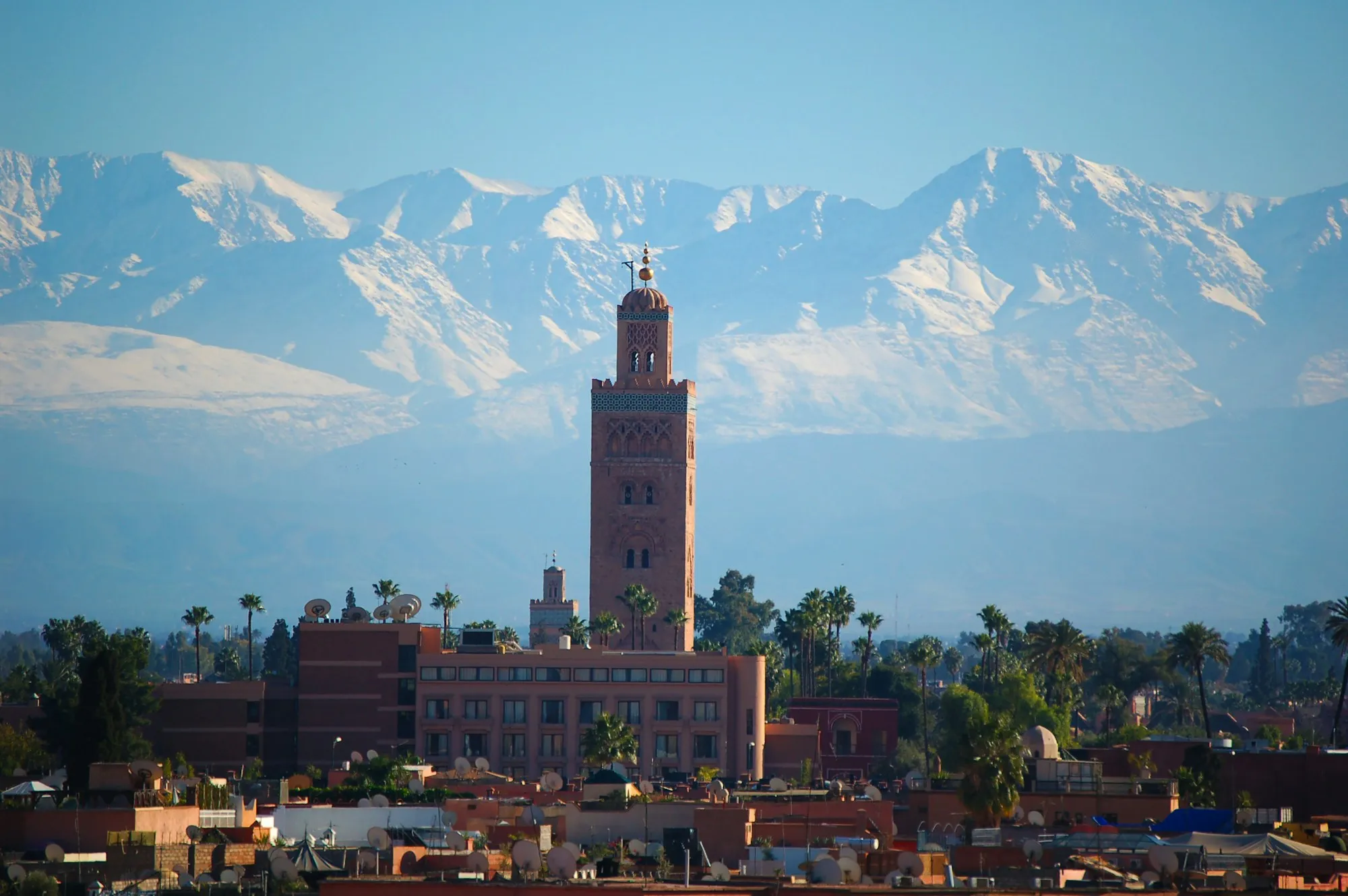 Paul Macallan · Unsplash
Region by region
Each part of Morocco has its own season: Marrakech and the cities in spring and autumn, the desert from October to April, the mountains for walking in late spring and early autumn, and the Atlantic coast in summer.
Marrakech and the imperial cities
Marrakech, Fes, Meknes and Rabat share the same rhythm, with Fes cooler and wetter in winter and Rabat, on the coast, milder all year. In July and August Marrakech averages about 99 to 100°F (37 to 38°C), and the medina’s lanes hold the heat: plan around a long midday break.
From December to February, days of 66 to 69°F (19 to 21°C) feel lovely in the sun, and the Atlas behind the city is white. Nights fall to around 43°F (6°C), though, and many riads are built for summer, not for heating. Ask whether yours has heaters. Fes is about 5 degrees colder: highs near 61°F (16°C) in January, lows near 39°F (4°C).
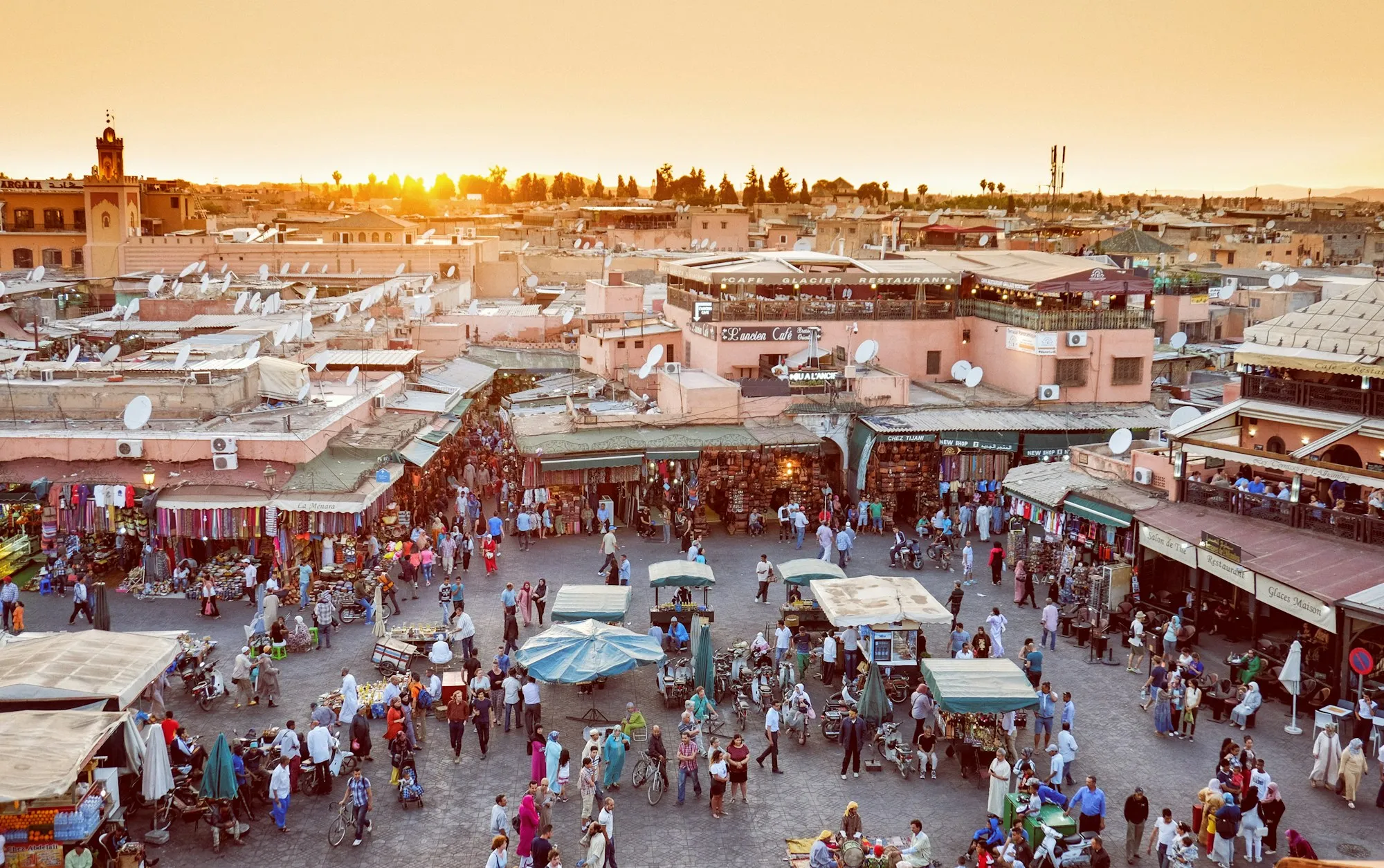 CALIN STAN · Unsplash
Fes is hot in summer too, with highs of 95°F (35°C) in July and August. April, May and October are the months to walk its medina.
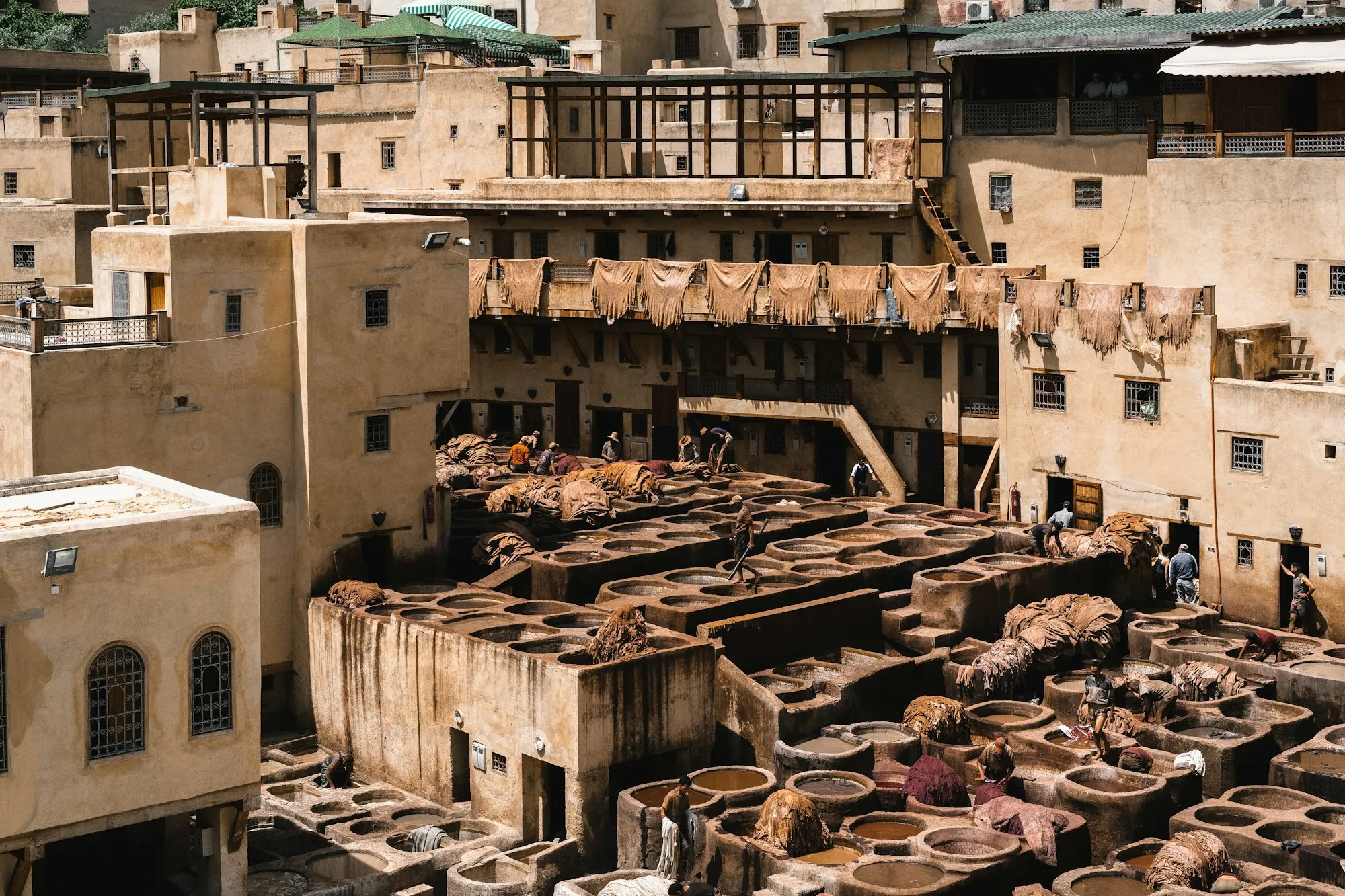 Adam Jang · Unsplash
The Sahara: Merzouga and Erg Chebbi
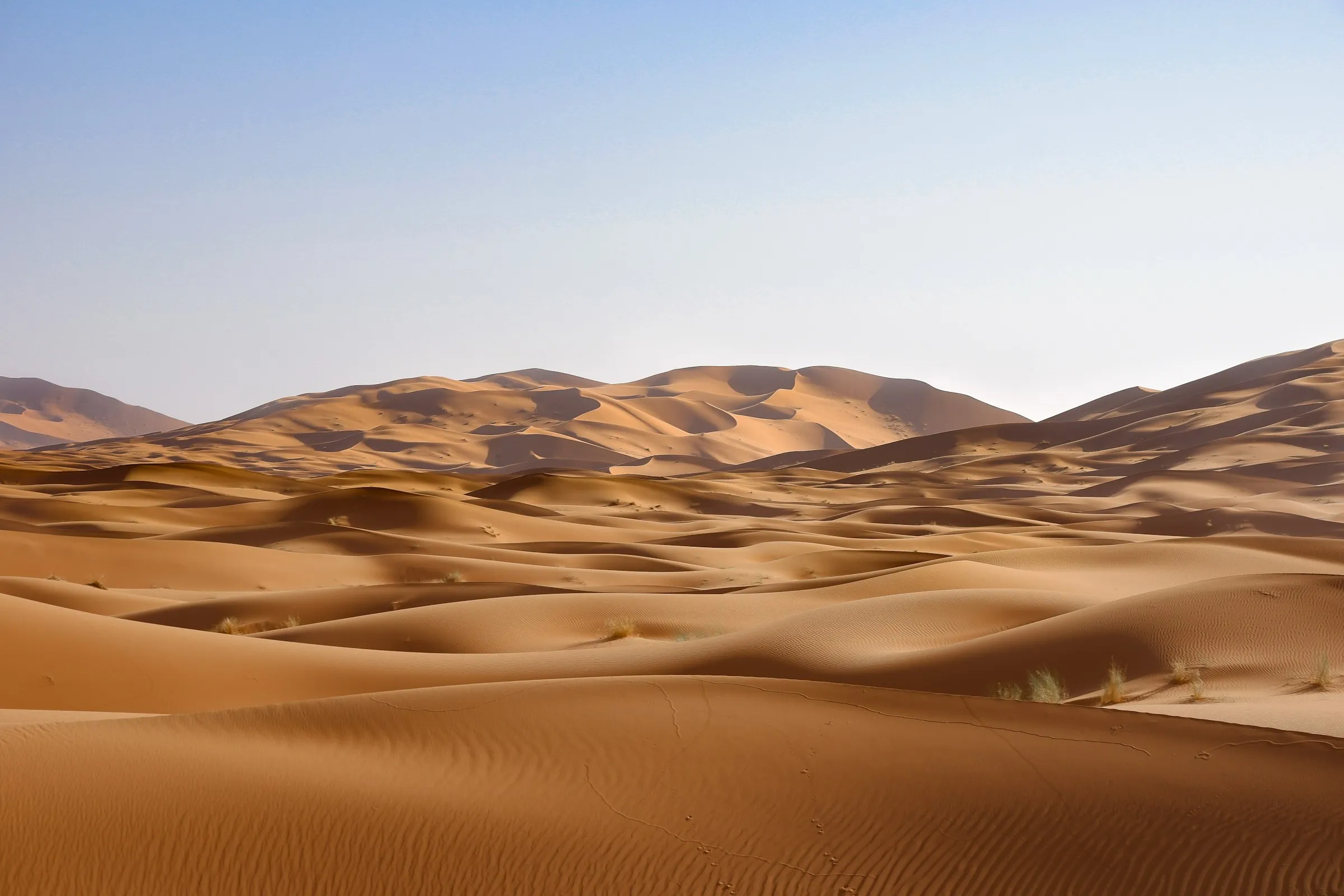
The dunes of Erg Chebbi, near Merzouga, are the trip most people come for, and the season matters most here: October to April is the window. The chart uses Errachidia, the official weather station nearest to the dunes, so expect the dunes themselves to feel a little hotter.
Average highErrachidia, near Merzouga
The desert seasonToo hot by day°F
1991–2020 averages, Moroccan weather service via WMO
From June to August, days pass 95°F (35°C) and reach 103°F (40°C) in July, so camel rides happen at dawn and dusk only. In December and January the afternoon is pleasant, but nights at camp average about 36 to 38°F (2 to 3°C) and can go lower: take a warm layer even if Marrakech felt like spring. March and April can bring wind and sandstorms.
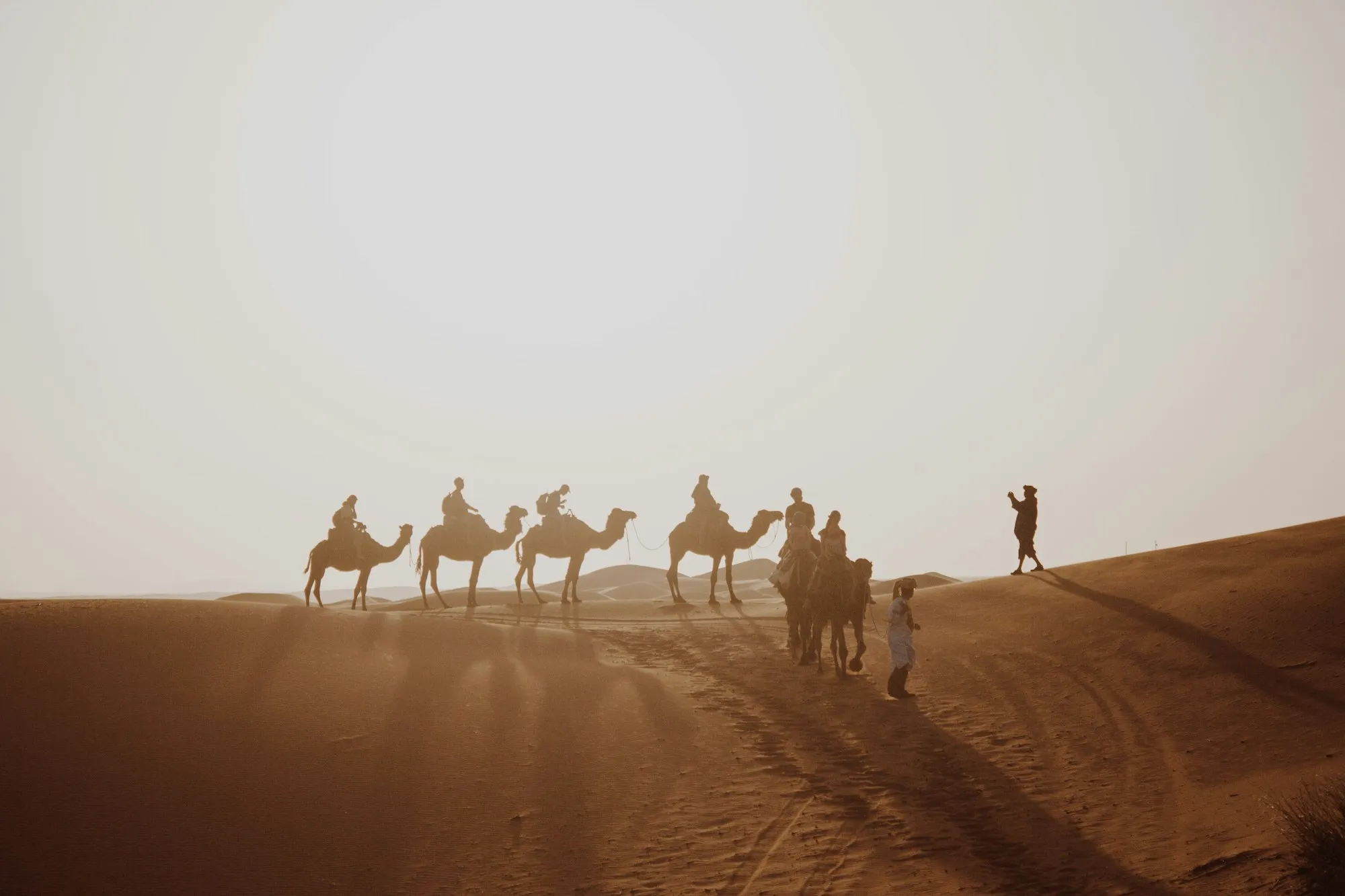 Dan Calderwood · Unsplash
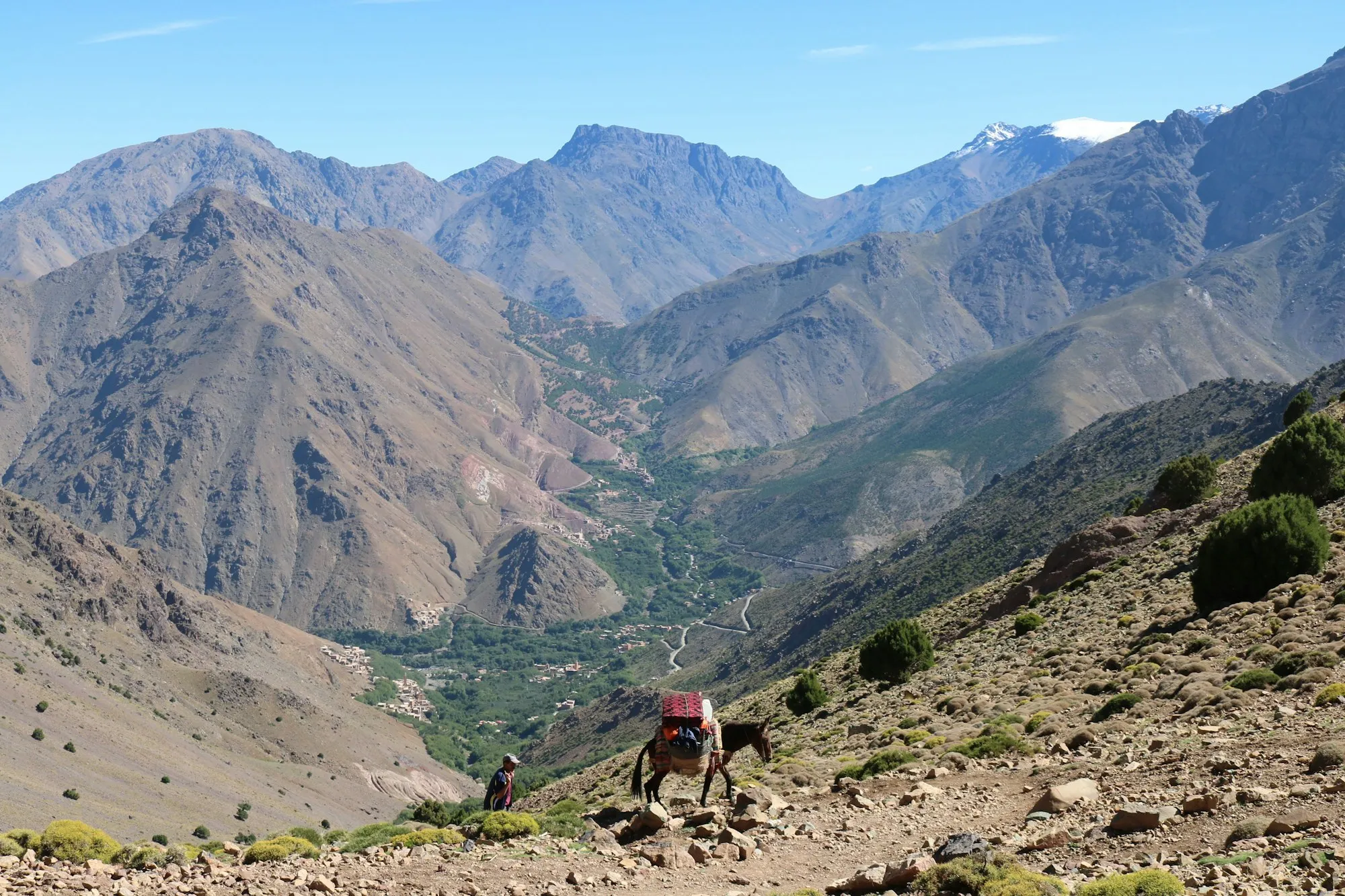
The High Atlas and Toubkal
The best months for walking in the High Atlas are May, June, September and October. The range sits an hour or two from Marrakech, and Toubkal (13,671 feet, 4,167 m) is North Africa’s highest peak. In summer the valleys around Imlil are noticeably cooler than Marrakech.
Snow usually covers the high ground from about December to March, and the Tizi n’Tichka pass to Ouarzazate can close for a few hours after a storm. A winter ascent of Toubkal needs crampons, an ice axe and a guide.
 Patrick Ogilvie · Unsplash
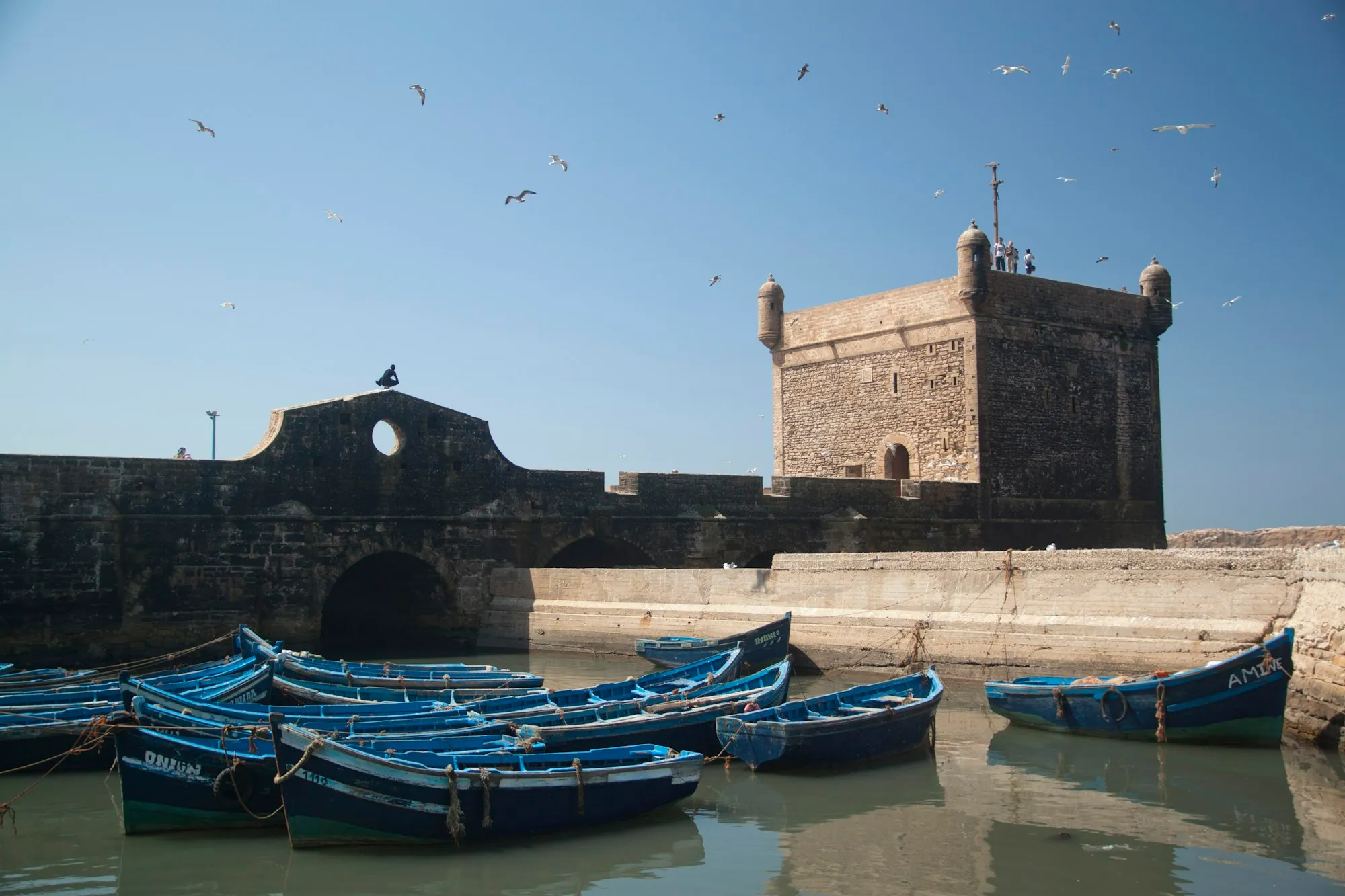
The Atlantic coast: Essaouira and Agadir
The coast has the gentlest weather in the country, and it is the one place to be in July and August. Essaouira stays near 72°F (22°C) at the height of summer because a steady trade wind blows from about April to September: great for kitesurfing and a relief from inland heat, less so for lying on the beach.
Agadir is warmer and calmer, with highs of 70°F (21°C) in January, 81°F (27°C) in August and almost no rain from May to September. That is why Europeans go there in winter.
 Rosa Ferreira · Unsplash
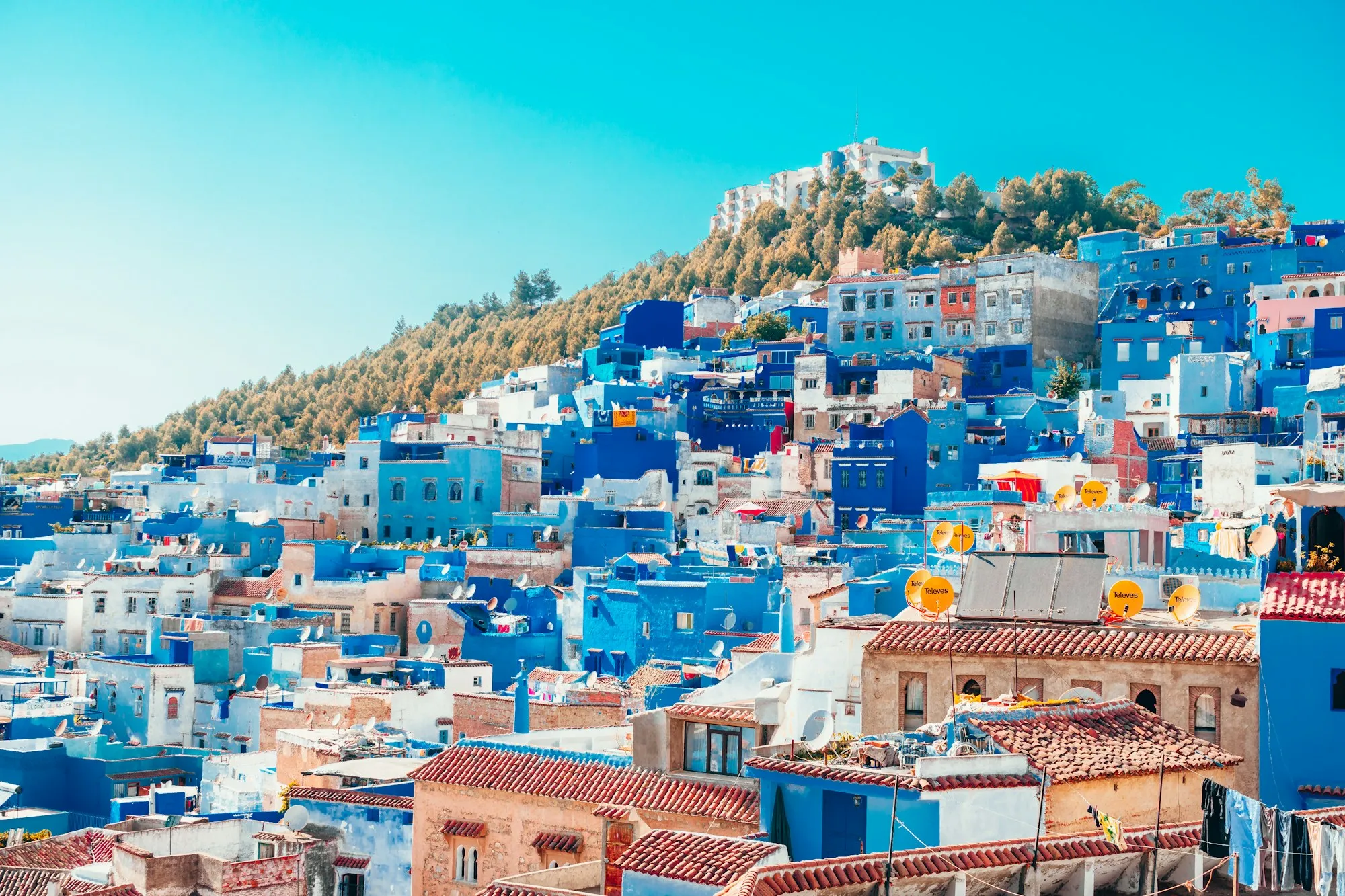
Chefchaouen and the north
The north is the greenest and wettest part of Morocco. Tangier gets about 4.5 inches (115 mm) of rain a month in November and December, against almost none in July, and Chefchaouen, higher in the hills of the Rif, is often wetter and cooler. Spring is the best time, with the hills green. Summer is warm but not extreme: Tangier averages 85°F (29°C) in July, though Fes, farther south, is hot.
 Pretty Pink · Unsplash
Ramadan 2027: dates and what changes
Ramadan 2027 starts around February 8 and ends around March 8 or 9, and Morocco confirms each date only after the new moon has been sighted. It moves about 11 days earlier each year, so in 2027 it falls in winter, the quiet season.
| Date in 2027 | What | Note |
|---|---|---|
| About Feb 8 (or 9) | Ramadan begins | Announced after the moon sighting |
| About Mar 9 (or 10) | Eid al-Fitr | Ends Ramadan: a family holiday |
| About May 16 (or 17) | Eid al-Adha | The main holiday of the year |
Morocco’s religious affairs ministry makes the announcements, so do not count on the day to the hour: leave a margin of one day on either side.
Traveling during Ramadan is fine, and many people enjoy it. What changes:
- Many local cafés and restaurants close during the day. Hotel and tourist restaurants stay open.
- Opening hours shorten, and some shops close in the afternoon.
- At sunset, people break the fast (iftar), streets empty for half an hour, then fill up late into the night.
- Avoid eating, drinking or smoking in the street by day; it is a matter of courtesy, not a rule for visitors.
Eid al-Fitr and Eid al-Adha are family holidays: transport is busy, and many businesses close for a day or two. Eid al-Adha falls in mid-May 2027, in the middle of the best season, so book early if your trip crosses it.
CALIN STAN · UnsplashFestivals worth timing a trip around
Most of Morocco’s big festivals are in late spring and early summer, and the organizers often set the exact days only a few months ahead. Check the festival’s own site before you book.
| Festival | Where | When |
|---|---|---|
| Rose Festival | Kelaat M’Gouna | May, set by the harvest |
| Fes Festival of World Sacred Music | Fes | Early June (2026: June 4–7) |
| Gnaoua and World Music Festival | Essaouira | June 24–26, 2027 (reported) |
| Marrakech Film Festival | Marrakech | Late November (2026: Nov 20–28) |
The Marrakech Film Festival is the one you can still catch this year: its 2026 edition runs November 20 to 28.
The weather for your own dates
Averages tell you which month to pick. Once the dates are set, what you need is the forecast for the days you are actually there.
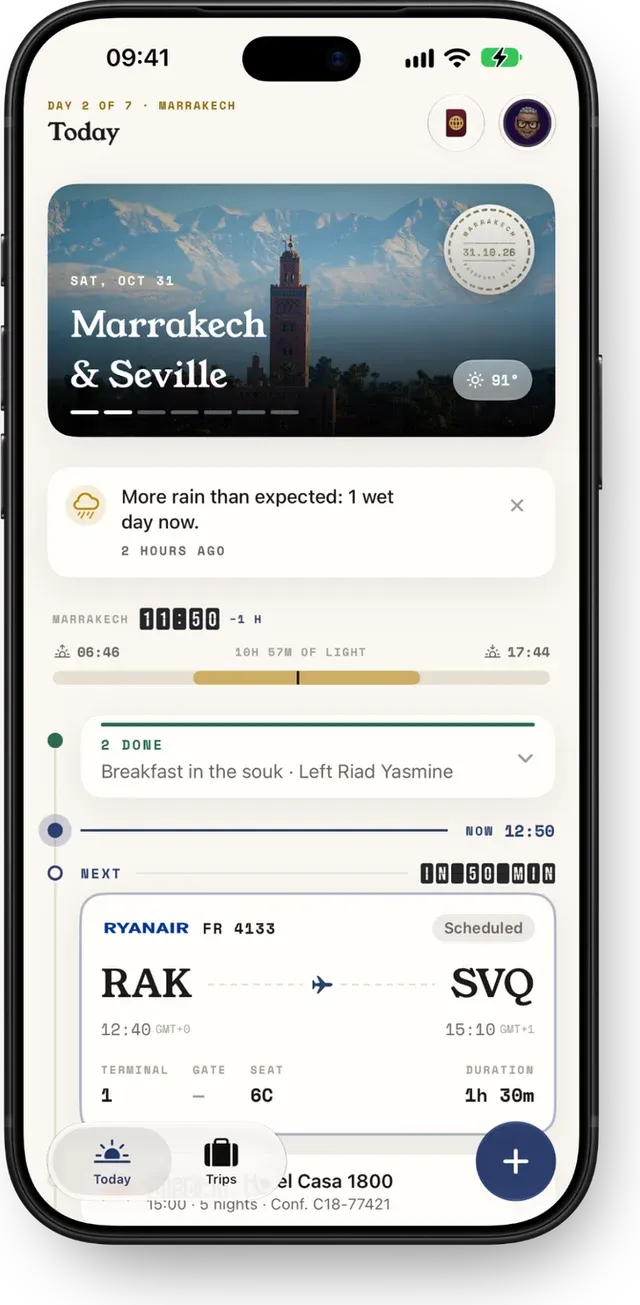
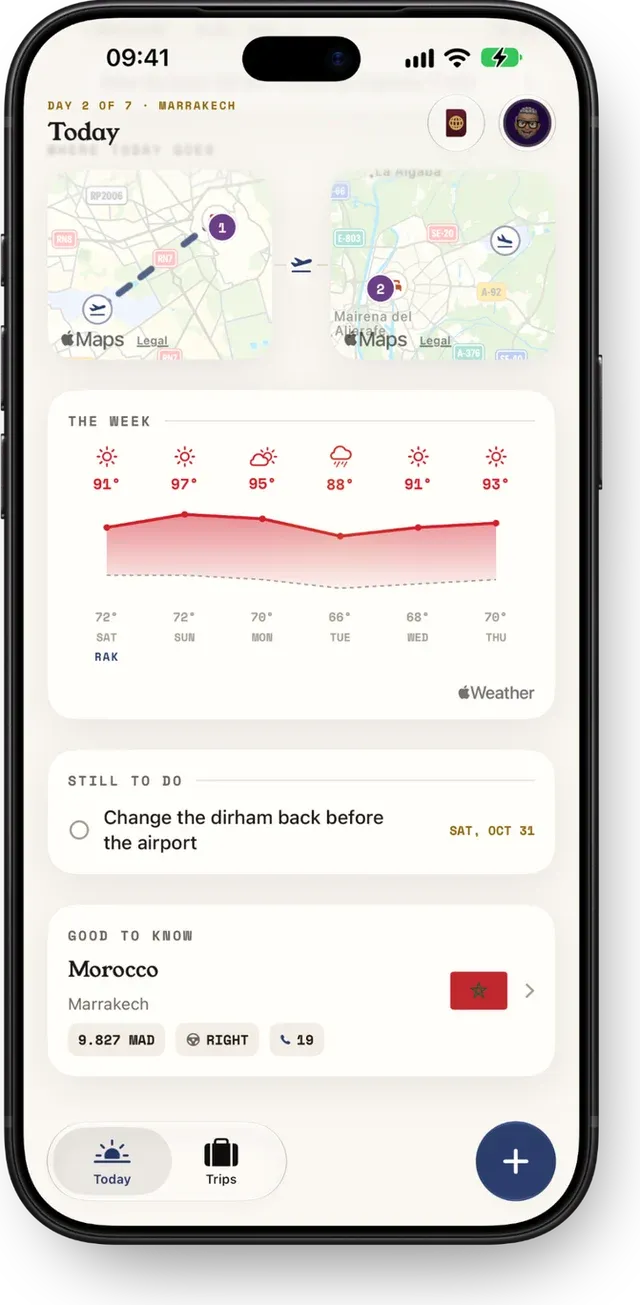
In Traypass, the Today screen charts the week ahead for the days of your trip, with each day’s high and low and a rain icon on the wet one. Higher up on the same screen are the day’s sunrise, sunset and hours of light, and if the forecast changes the app says so there: “More rain than expected: 1 wet day now.”
Below the weather, the same screen lists what is still to do and a Good to know card for Morocco: the dirham rate, which side of the road cars drive on, and the local police number. You can build the days themselves with the itinerary planner and pack for the forecast with the packing list.
Morocco month by month
Average daily highs, with the month’s verdict. Nights are colder: Marrakech lows are 43°F (6°C) in January and 69°F (21°C) in July, and in the desert they fall to 36°F (2°C) in January.
| Month | Marrakech | Desert (Errachidia) | Coast (Agadir) | Verdict |
|---|---|---|---|---|
| January | 66°F (19°C) | 61°F (16°C) | 70°F (21°C) | Cities and coast; cold nights |
| February | 69°F (21°C) | 65°F (18°C) | 72°F (22°C) | Good; Ramadan in 2027 |
| March | 74°F (24°C) | 72°F (22°C) | 74°F (23°C) | Very good |
| April | 78°F (26°C) | 79°F (26°C) | 74°F (23°C) | One of the best |
| May | 85°F (29°C) | 87°F (30°C) | 76°F (24°C) | Very good; roses |
| June | 92°F (34°C) | 96°F (35°C) | 78°F (26°C) | Coast and mountains |
| July | 100°F (38°C) | 103°F (40°C) | 80°F (27°C) | Coast only |
| August | 99°F (37°C) | 101°F (38°C) | 81°F (27°C) | Coast only |
| September | 90°F (32°C) | 91°F (33°C) | 79°F (26°C) | Good from mid-month |
| October | 83°F (28°C) | 80°F (27°C) | 79°F (26°C) | One of the best |
| November | 74°F (23°C) | 69°F (21°C) | 75°F (24°C) | Very good; rain in the north |
| December | 68°F (20°C) | 62°F (17°C) | 72°F (22°C) | Cities; snow in the Atlas |
If you want everything on one trip (Marrakech, a night in the dunes and a few days on the coast), aim for April or October. If you only have the summer, spend it in Essaouira and the mountains, and leave the desert for another year.
Before you go
On a US passport you need no visa for a stay of up to 90 days, and Morocco asks for a passport valid for at least six months on arrival. What documents to carry lists the rest.
Morocco uses plug types C and E at 230 V: bring an adapter, and check that your charger accepts 230 V (phone and laptop chargers do; US hair dryers usually don’t). For a spring trip, how to pack for a week in a carry-on works well, with a warm layer for desert nights.
Morocco has stayed on Greenwich Mean Time all year since September 20, 2026, with no change for Ramadan: New York is 5 hours behind in winter and 4 in summer, and Madrid, Paris, Berlin and Rome are 1 hour ahead in winter and 2 in summer.

 TraypassApp Store