How much time do you need for a connecting flight? On one ticket, the airline’s minimum is the floor, between 40 and 90 minutes at Europe’s big hubs. What you should plan on is more: about 90 minutes in Europe, 2 to 3 hours when you land in the US and fly on, and 4 hours or more on separate tickets.
- One ticket in Europe
- 90 min
- Paris Aéroport’s advice inside CDG Terminal 2
- Landing in the US
- 2–3 h
- Immigration, customs, bags, and TSA again
- Separate tickets
- 4 h
- British Airways’ advice at Heathrow
How much time you need, by situation
It depends on three things: whether both flights are on one ticket, whether you cross a border, and whether you change terminals or airports. The table puts the airlines’ minimums next to what airports and airlines recommend.
| Situation | Airline’s minimum | Plan on |
|---|---|---|
| One ticket, inside Schengen | 40–60 min | About 90 min |
| One ticket, crossing a border in Europe | 50–80 min | 90–120 min |
| Landing in the US, flying on | — | 2–3 h |
| Separate tickets, same airport | None | At least 4 h |
| Changing airports | 3 h (JAL, Tokyo) | 4 h plus the transfer |
Figures checked on October 25, 2026, on the airlines’ and airports’ own pages; Air France’s minimums at Charles de Gaulle come from travel-trade reports.
What a minimum connection time is
A minimum connection time is the shortest gap between two flights that an airline will sell you on one ticket at a given airport. It changes with the airport, the airline, the terminals, and whether you cross a border.
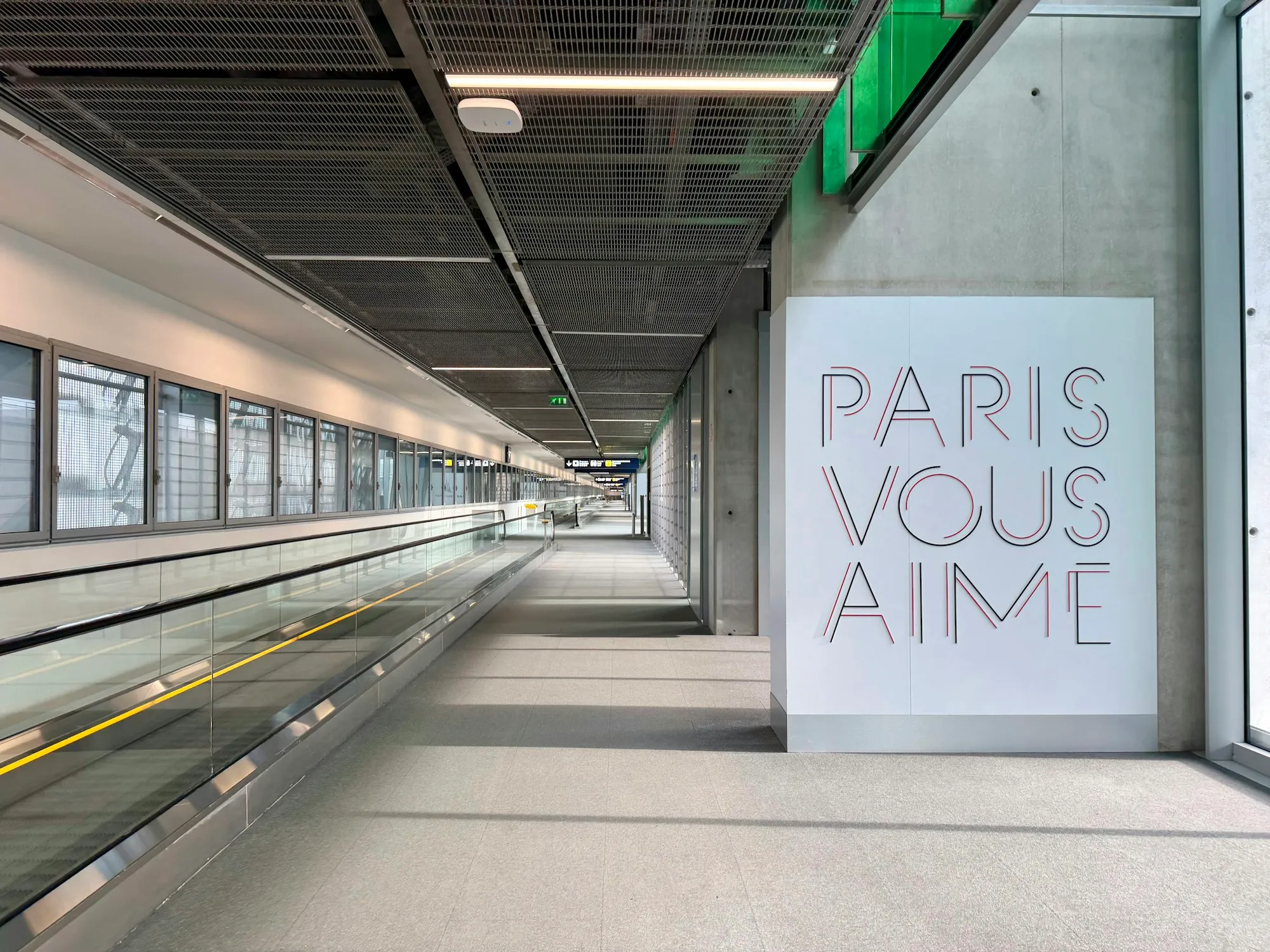
It is a floor, not advice: Japan Airlines says meeting it does not guarantee the connection when there are delays. Airports often recommend more: Paris Aéroport suggests about 90 minutes between two flights inside Terminal 2 at Charles de Gaulle, while Air France is reported to sell some connections there with 60 minutes.
 John Cameron · Unsplash
Minimum connection times at big airports
They range from 40 minutes inside Schengen at Amsterdam to about 90 between terminals at Heathrow, and US airports speak in hours. At Heathrow, every connecting passenger goes through security again. At Charles de Gaulle, Air France’s Short Connection Pass gives priority at security and border control to passengers with under an hour between flights, a delayed first flight, or long lines.
| Airport | Time | What it is |
|---|---|---|
| Amsterdam Schiphol | 40 / 50 min | KLM’s minimum, Schengen / non-Schengen |
| Frankfurt | 60 min | Lufthansa’s minimum since March 30, 2025 |
| Paris-Charles de Gaulle | About 90 min | Paris Aéroport’s advice inside Terminal 2 |
| London Heathrow | About 90 min | British Airways, Terminal 3 to 5 |
| Seattle-Tacoma | 120–180 min | The airport’s advice for international arrivals |
| Chicago O’Hare | Up to 2 h | Immigration and customs alone, rarely longer |
One ticket or separate tickets: who rebooks you
On one booking, if the first flight is late and you miss the second, the airline puts you on another flight. On separate tickets, often called a self-transfer, nobody does: the second airline owes you nothing, and you buy a new ticket.
The bags follow the same rule. On one booking, they usually go through to your final destination. On separate bookings, you collect them, check in again, and go through security again. That is why British Airways recommends at least 4 hours between separate tickets at Heathrow.
On one booking under EU rules (any flight from an EU airport, and flights into the EU on an EU airline), a missed connection that gets you to your final destination more than 3 hours late also entitles you to compensation, unless the delay was caused by extraordinary circumstances or you were held up at security:
| Distance to your final destination | Compensation |
|---|---|
| Up to 1,500 km (about 930 miles) | €250 |
| 1,500–3,500 km (about 930–2,175 miles), or any longer flight within the EU | €400 |
| Over 3,500 km (about 2,175 miles) | €600 |
On separate tickets, EU rules can still cover a delay on the first flight, but not the second flight you missed. Flights within the US have no EU-style compensation law.
Passport control when you connect in Europe
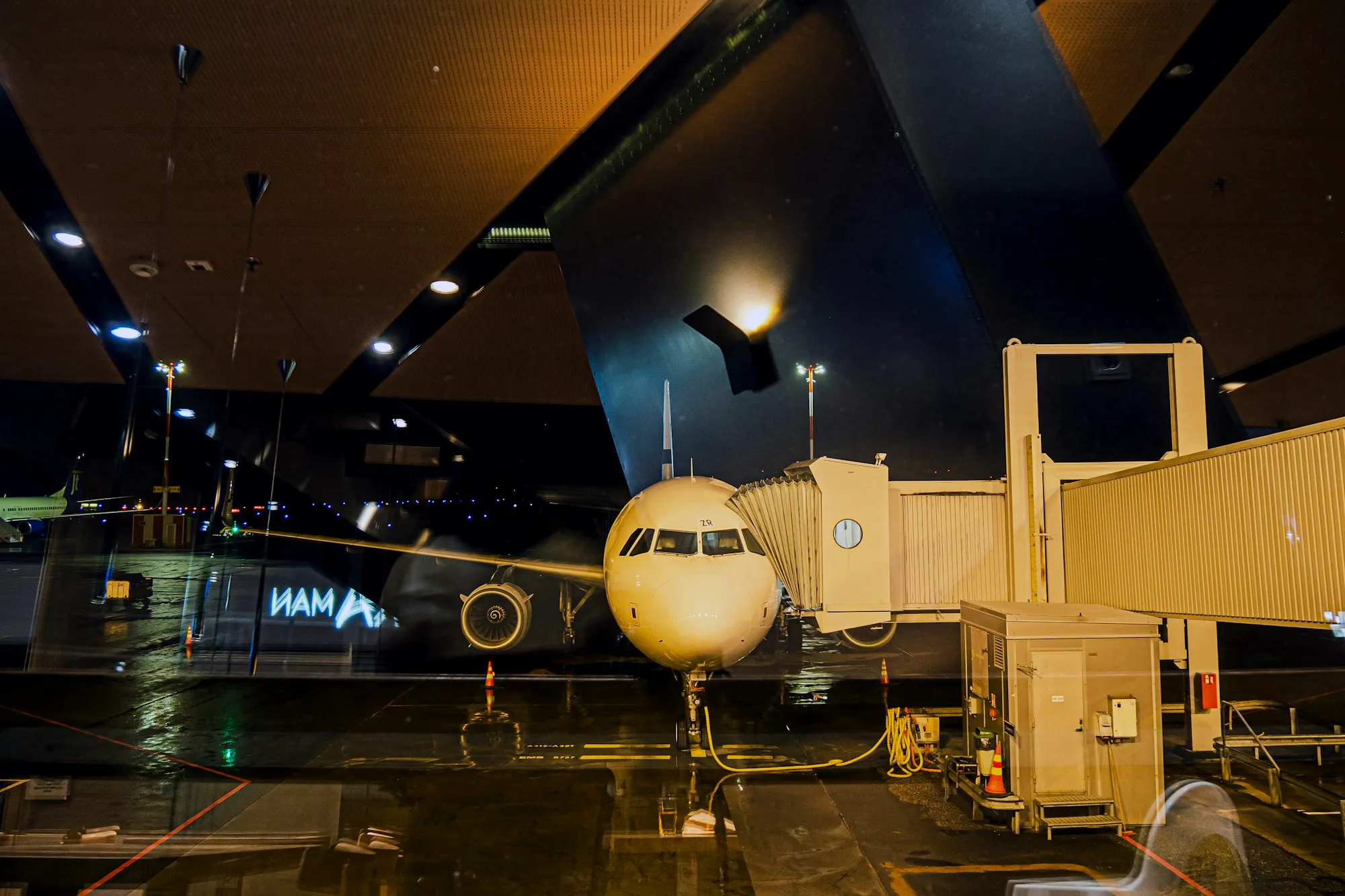
A connection between two Schengen countries has no passport check. Crossing the Schengen border does, so flying from the US, you get one at the first Schengen airport on the way in and at the last one on the way out, and the line is part of your connection time.
Since April 10, 2026, the Entry/Exit System (EES) registers travelers from outside the EU, Americans included, with fingerprints and a facial image at that border. Long lines were reported in its first weeks. ETIAS, the EU’s travel authorization, is not in operation yet: you don’t need it.
 Majkl Velner · Unsplash
The UK is not in Schengen. Connecting airside at Heathrow, you don’t go through UK immigration. Changing airports in London is different: you enter the UK, so you need an Electronic Travel Authorisation (ETA), £20 (about $27), even if you only cross the city.
Connecting through a US airport
You clear immigration and customs at the first US airport you land at, even when your final stop is another US city. You collect your checked bags, take them through customs, recheck them with the airline, and go through TSA security again. Seattle-Tacoma asks for at least 120 to 180 minutes between flights.
 Silvia Fang · Unsplash
At Chicago O’Hare, United and American recheck bags right after customs; with other airlines, you leave Terminal 5 to do it. Immigration there rarely takes more than two hours.
A few airports abroad, such as Dublin and Toronto, have US preclearance: you go through US immigration before you board and land as a domestic passenger. If someone traveling with you holds a passport from a Visa Waiver Program country, they need an ESTA even just to change planes in the US: $40.62.
Changing airports: London, Paris, Tokyo
Count the trip across town plus a whole new check-in. You collect your bags at the first airport and check them in again at the second, and the trip between them is at your expense.
| Change | How | Time | Fare |
|---|---|---|---|
| Stansted → Gatwick | Bus, changing in London | About 3 h | — |
| Stansted → Gatwick | Train via Liverpool Street and Victoria | 1 h 15 min + crossing London | — |
| Charles de Gaulle → Orly | RER B and Orlyval | 60–90 min | €14 |
| Charles de Gaulle → Orly | Taxi | 35 min–1 h 40 min | From about €100 |
| Narita → Haneda | Train | 90–115 min | ¥1,760–3,080 |
| Narita → Haneda | Airport Limousine bus | 65–85 min | ¥3,600 |
Even on one ticket, Japan Airlines asks for at least 3 hours between Haneda and Narita. In London, add UK border control at the first airport and the ETA.
 Neil Mewes · Unsplash
How tight is too tight
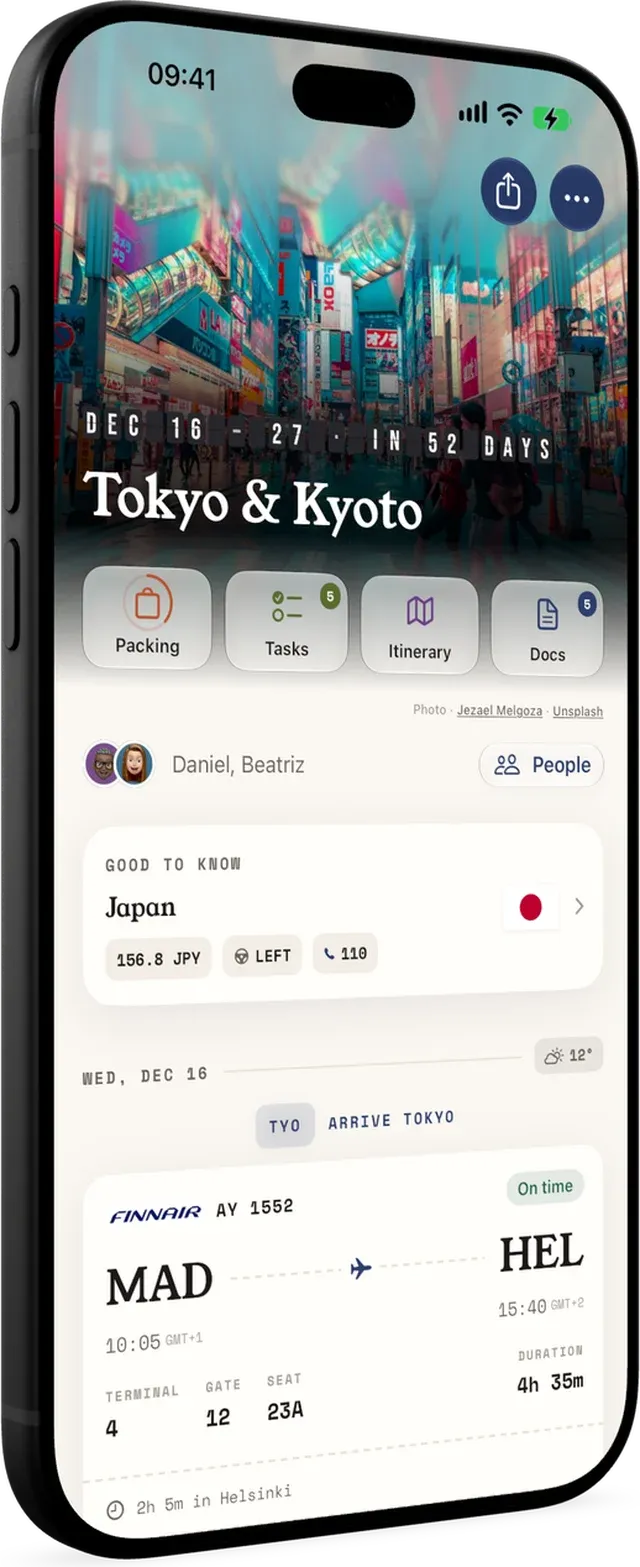
Under 45 minutes, you will be running; under 90, a late first flight leaves you no room; and if you change airports, anything under 4 hours is tight. Those are the lines Traypass draws when you add your flights, and what it shows under the first one:
- Under 45 minutes at the same airport: Tight connection.
- Between 45 and 90 minutes: Not much room if the first leg runs late.
- A different airport for the next flight: You change airport, with both codes, counted as tight under 4 hours.
- Different confirmation codes on the two flights: Separate bookings.
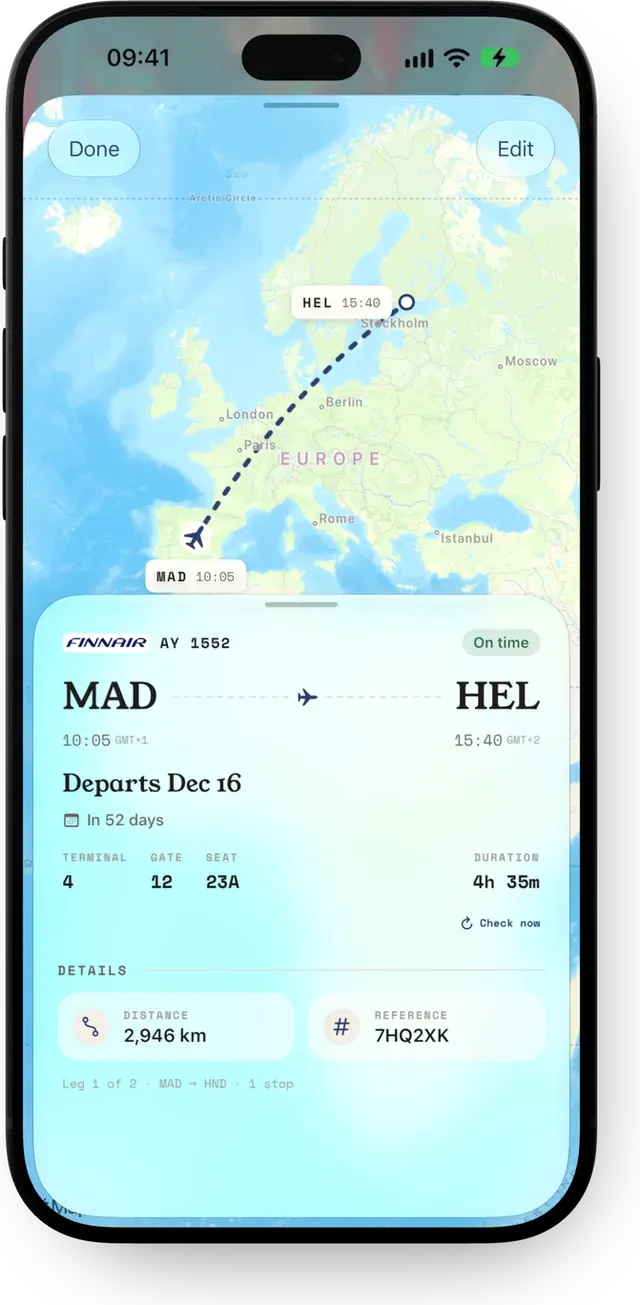
These are Traypass’s warnings, not airline rules. In this sample trip to Tokyo, both Finnair flights are on one booking, with 2 hours 5 minutes in Helsinki, so the line under the flight has nothing to warn about.
Two tickets, two airports
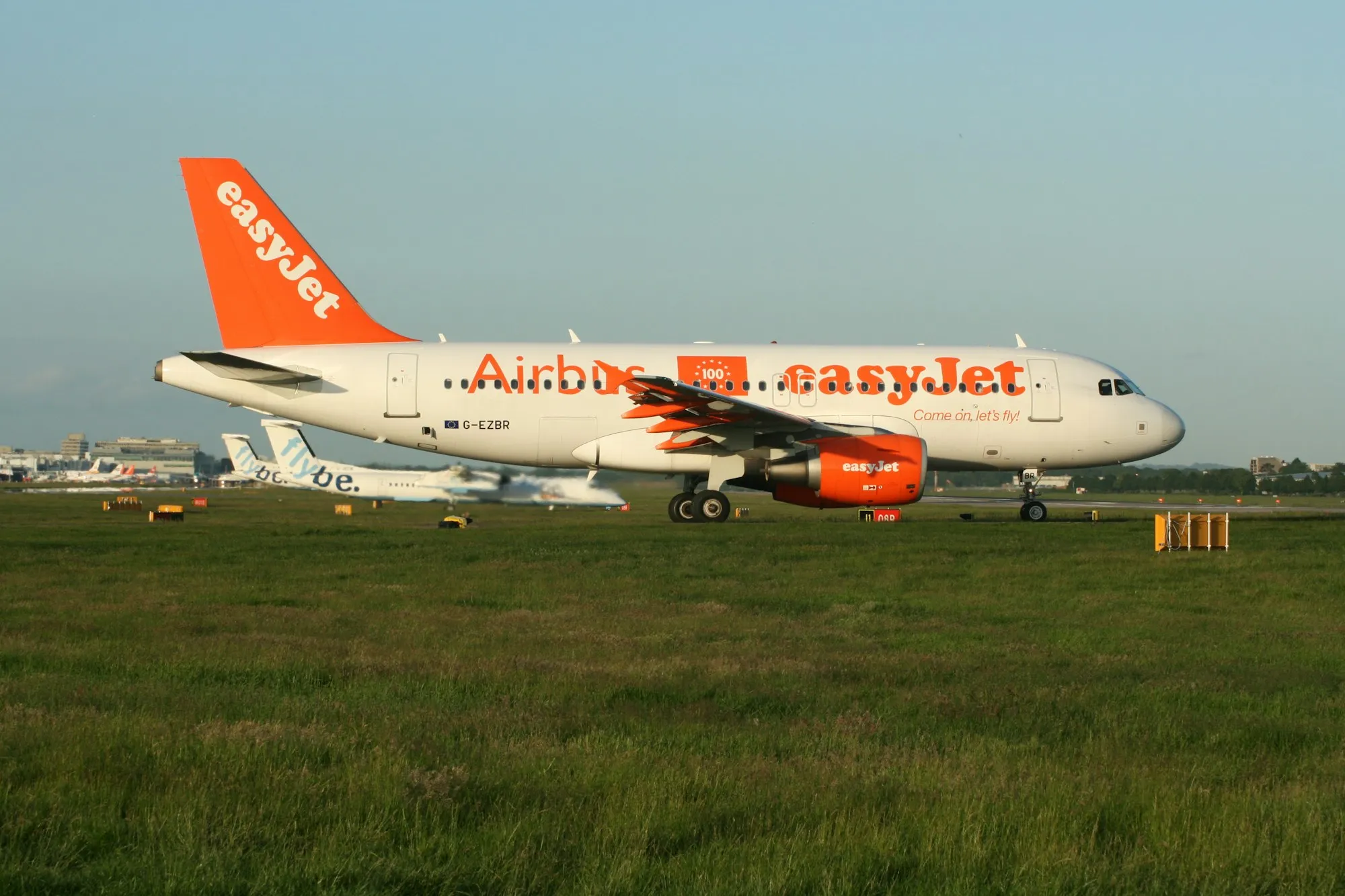
Two tickets and two airports make the riskiest connection there is. In this sample trip to Reykjavík, a Ryanair flight lands at Stansted at 8:10 a.m., and an easyJet flight leaves from Gatwick’s North Terminal at 11:40 a.m., on another booking.
Traypass flags both problems at once: you change airports, and the bookings are separate. Of the 3 hours 30 minutes, the bus across London takes about 3, leaving about half an hour for UK border control at Stansted, then bag drop and security at Gatwick. If Ryanair lands late, easyJet owes you nothing.
The fix is a later flight from Gatwick, or a route sold on one ticket.
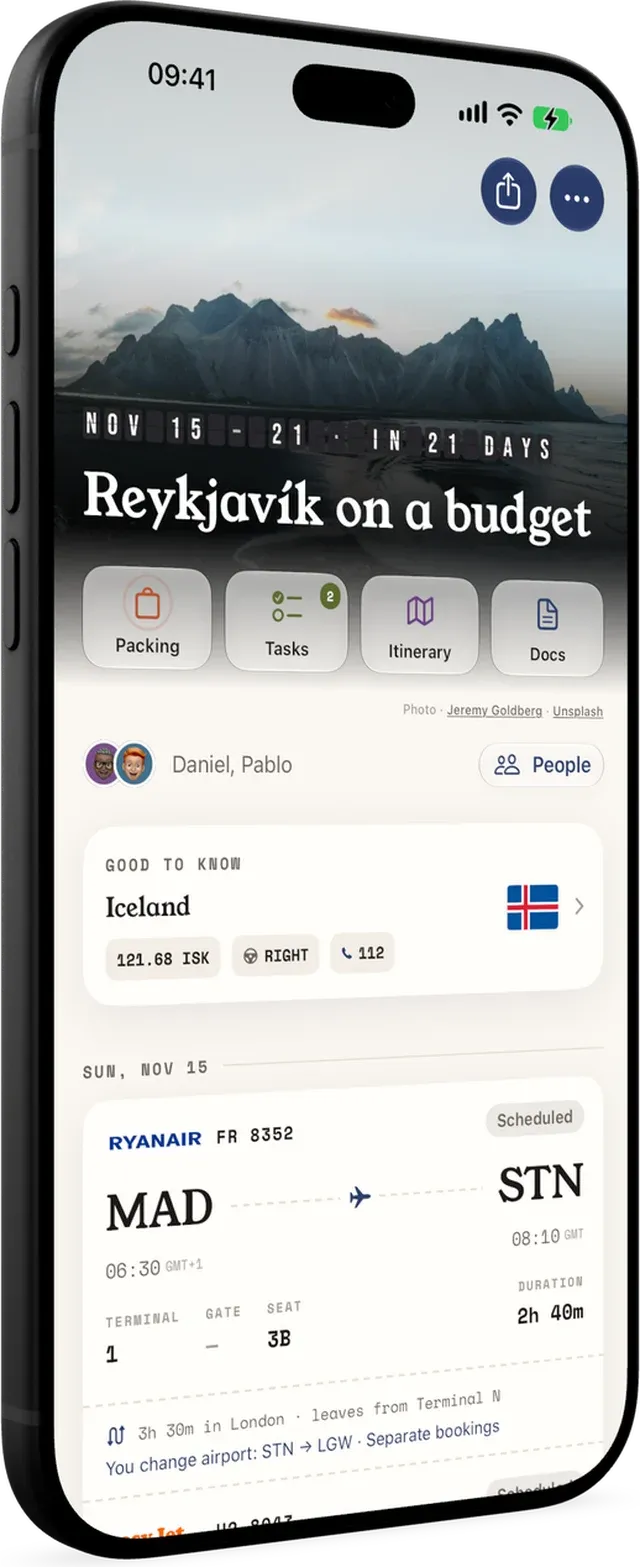
Traypass shows each connection between its two flights as soon as both are on the trip, and its flight alerts tell you when the first one is running late. Keep the ETA or ESTA with your passport in travel documents. If your connection leads to Japan, start with what to know before traveling to Japan.
 TraypassApp Store