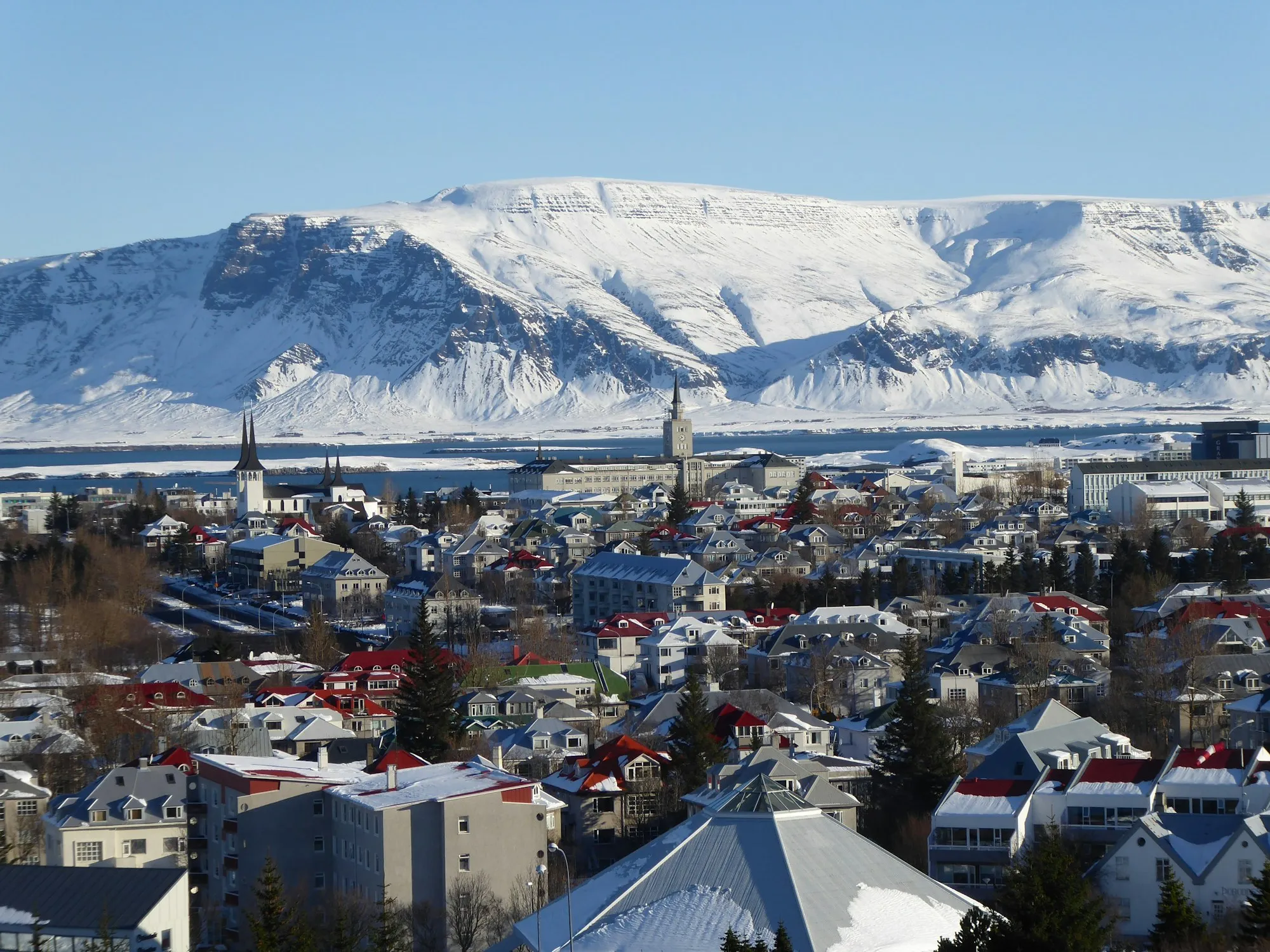
What to pack for Iceland in winter comes down to the wind more than the cold. Reykjavík rarely drops far below freezing, but rain, sleet, and gusts can all arrive in the same afternoon, and the days are short. Pack layers that keep out wind and water, boots that grip on ice, and a swimsuit.
- Highs in Reykjavík
- 3 °C
- About 37 °F, December to February
- Lows
- −2 °C
- About 28 °F; colder in the north
- Daylight on December 21
- 4 h
- Sunrise about 11:20 a.m., sunset about 3:30 p.m.
What the weather is like in winter
Mild for the latitude, wet and windy. The table shows Reykjavík’s averages from the Icelandic Met Office (1991–2020) and roughly how much daylight each month has. February is the coldest and windiest month; the north, around Akureyri, is a few degrees colder and calmer, and the south coast near Vík gets two to three times as much rain.
| Month | High | Low | Rain and snow | Daylight |
|---|---|---|---|---|
| November | 4.6 °C (40 °F) | −0.1 °C (32 °F) | 87 mm | 8 h on the 1st |
| December | 3.3 °C (38 °F) | −1.6 °C (29 °F) | 95 mm | 4 h on the 21st |
| January | 3.2 °C (38 °F) | −1.7 °C (29 °F) | 87 mm | About 5 h mid-month |
| February | 3.3 °C (38 °F) | −1.9 °C (29 °F) | 91 mm | 7 h on the 1st |
| March | 4.2 °C (40 °F) | −1.3 °C (30 °F) | 81 mm | 10 h on the 1st |
The weather changes fast, so check the forecast at en.vedur.is every day, and the road conditions at umferdin.is before any drive. The Met Office issues yellow, orange, and red warnings; on an orange day, change your plans rather than your clothes.
The three layers
Every list for an Icelandic winter starts the same way, and so does the advice from SafeTravel, Iceland’s safety service: a thin base layer of wool or synthetics, an insulating middle layer, and a shell that keeps out wind and water.
- Base: a long-sleeved thermal top and leggings, merino wool if you can. Two sets are enough for a week.
- Middle: a wool sweater or a fleece; a light down jacket on the coldest days.
- Outer: a waterproof, windproof jacket with a hood, and rain pants to pull over the rest.
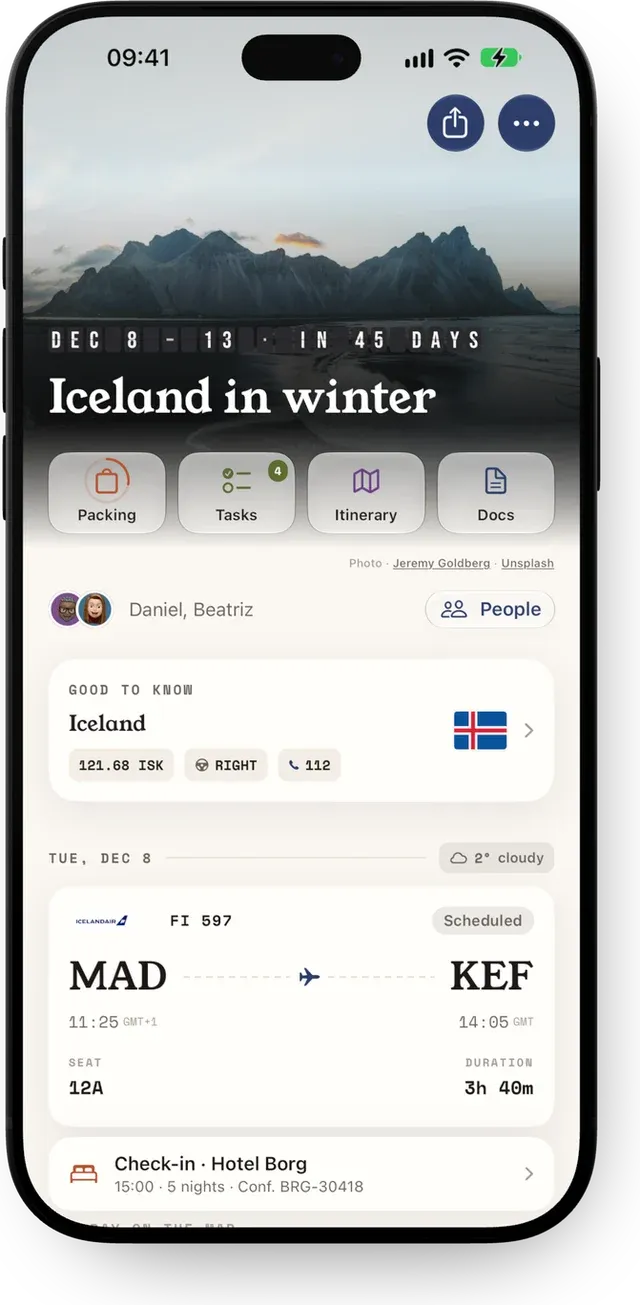
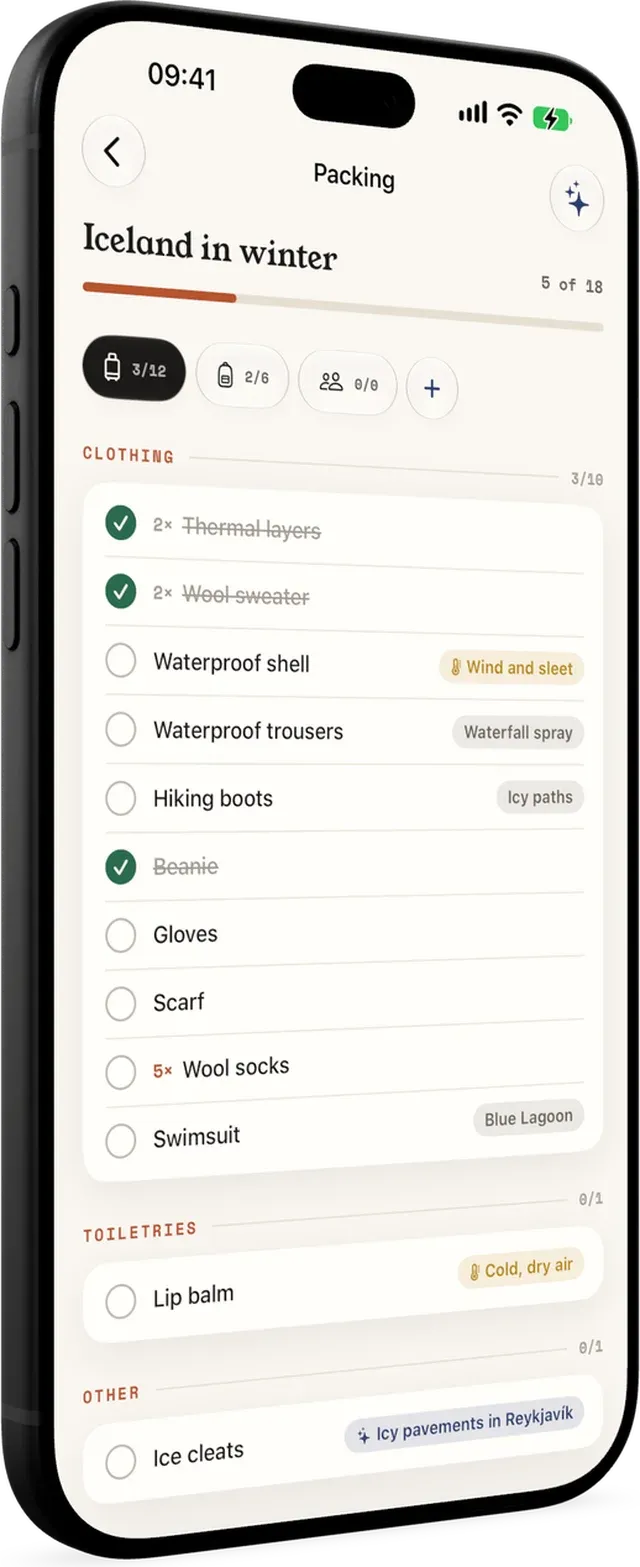
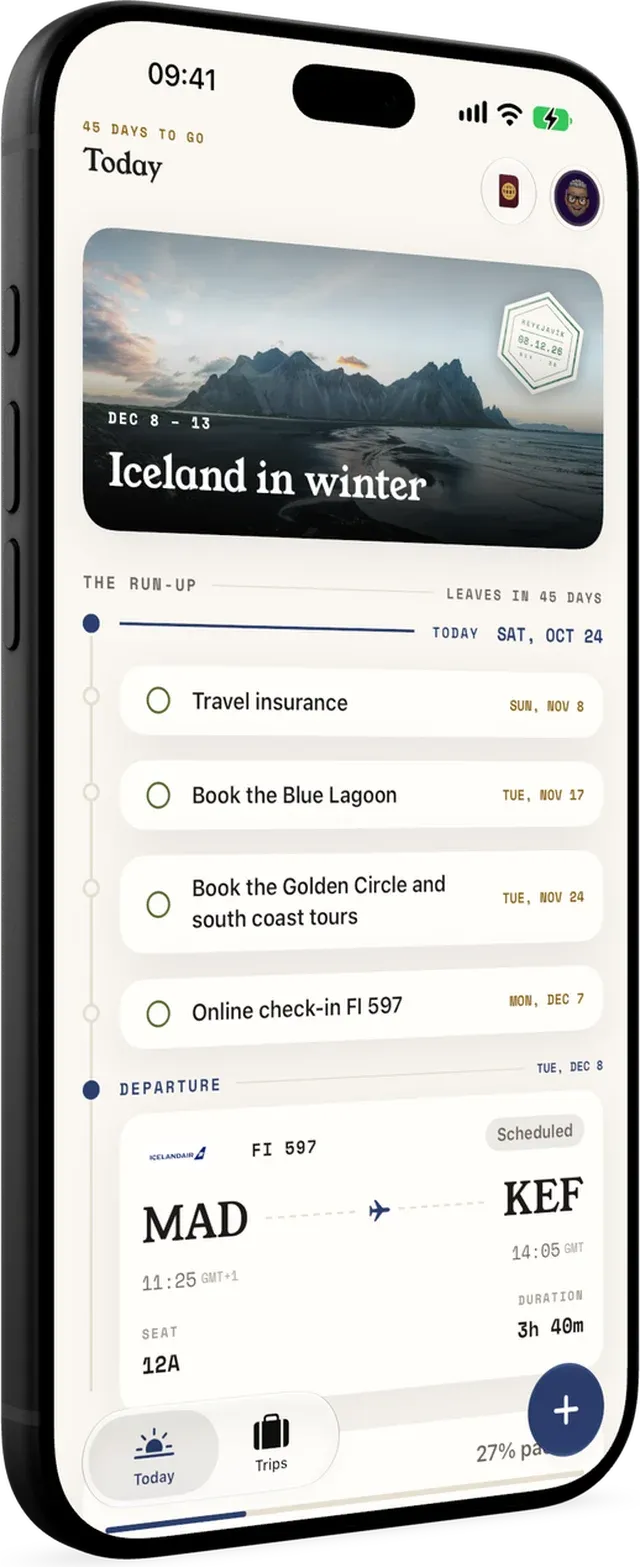
Leave the cotton and the jeans at home: they stay wet and cold. In this sample packing list, the thermals, the wool sweaters, and the beanie are already packed; the shell, the rain pants, and the boots each carry the reason they’re on the list: wind and sleet, waterfall spray, icy paths.
What a December week looks like
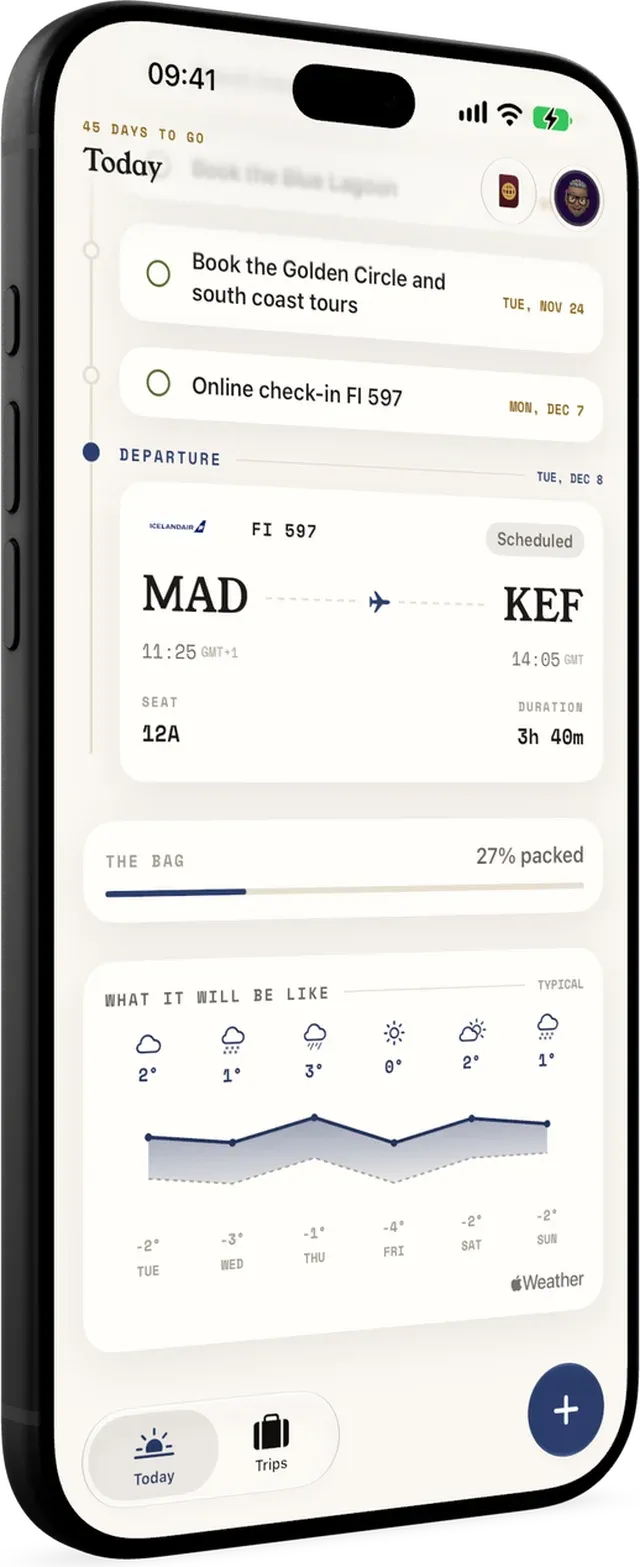
For a sample trip to Reykjavík in December, Traypass shows a week much like the averages: highs between 0 °C and 3 °C (32 °F to 37 °F), lows down to −4 °C (25 °F), snow on two days, rain on another, and one clear day. Every day in that week asks for the same three layers.
Clear nights are the ones for the northern lights: often still, dark, and the coldest of the week, so wear everything you brought.
Plugs, power, and the number to call
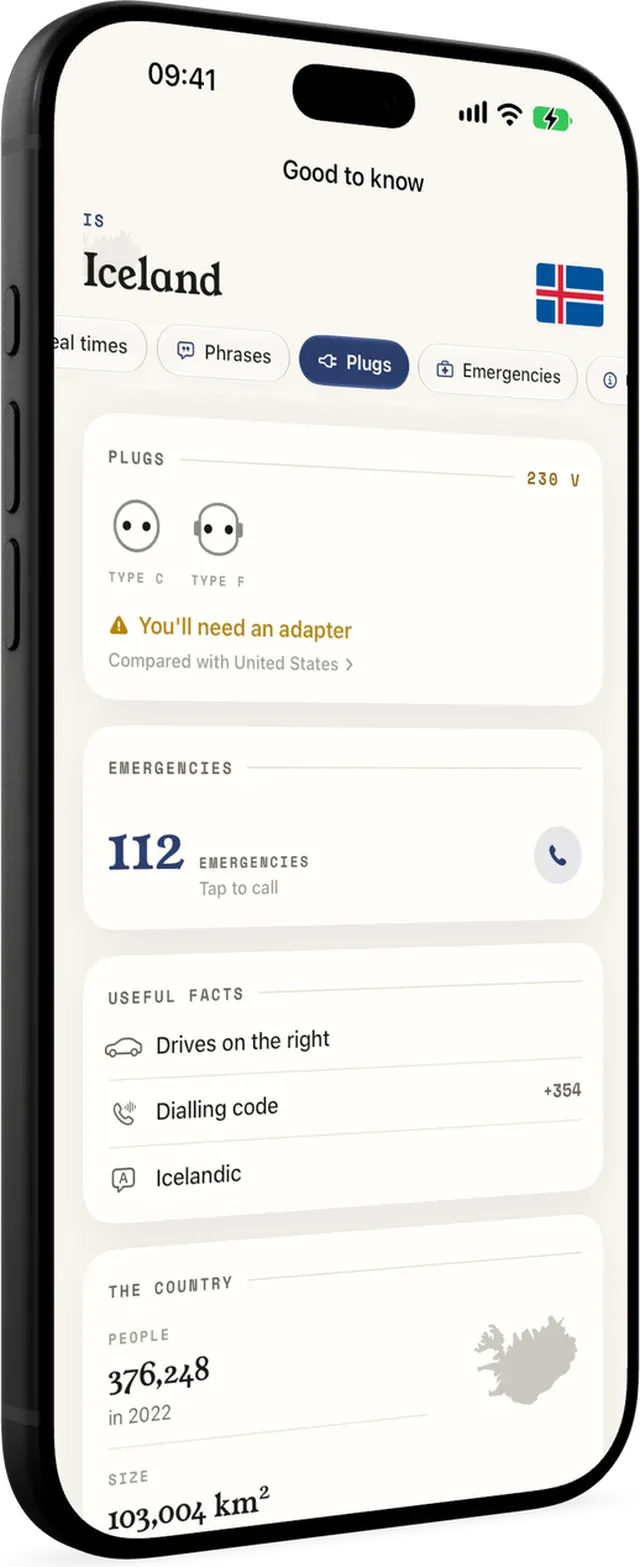
Icelandic sockets are types C and F at 230 V, the same as most of Europe, so US plugs need an adapter. Phone and laptop chargers marked 100–240 V work with just the adapter; a hair dryer or straightener made only for 120 V needs a voltage converter, so it is simpler to leave it at home.
The cold drains phone batteries faster, and you will use the phone for maps, photos, and the aurora forecast. Bring a power bank and keep the phone in an inside pocket. The emergency number is 112, and the SafeTravel Iceland app can send your location to it.
What to book before you pack
In winter, some things need booking ahead: the Blue Lagoon sells entry by time slot, and tours to the Golden Circle and the south coast fill up around the holidays. In this sample trip, those are the tasks in the weeks before leaving, alongside travel insurance and online check-in.
If you drive, leave a travel plan on safetravel.is, keep your schedule flexible, and park facing into the wind, holding the door with both hands as you open it: a gust can bend it back on its hinges.
Boots, socks, and ice cleats
Feet are where a winter trip goes wrong. Wear warm, waterproof boots with a deep tread that you have already broken in, and wool socks; carry a spare pair in your daypack.
 Nicolas J Leclercq · Unsplash
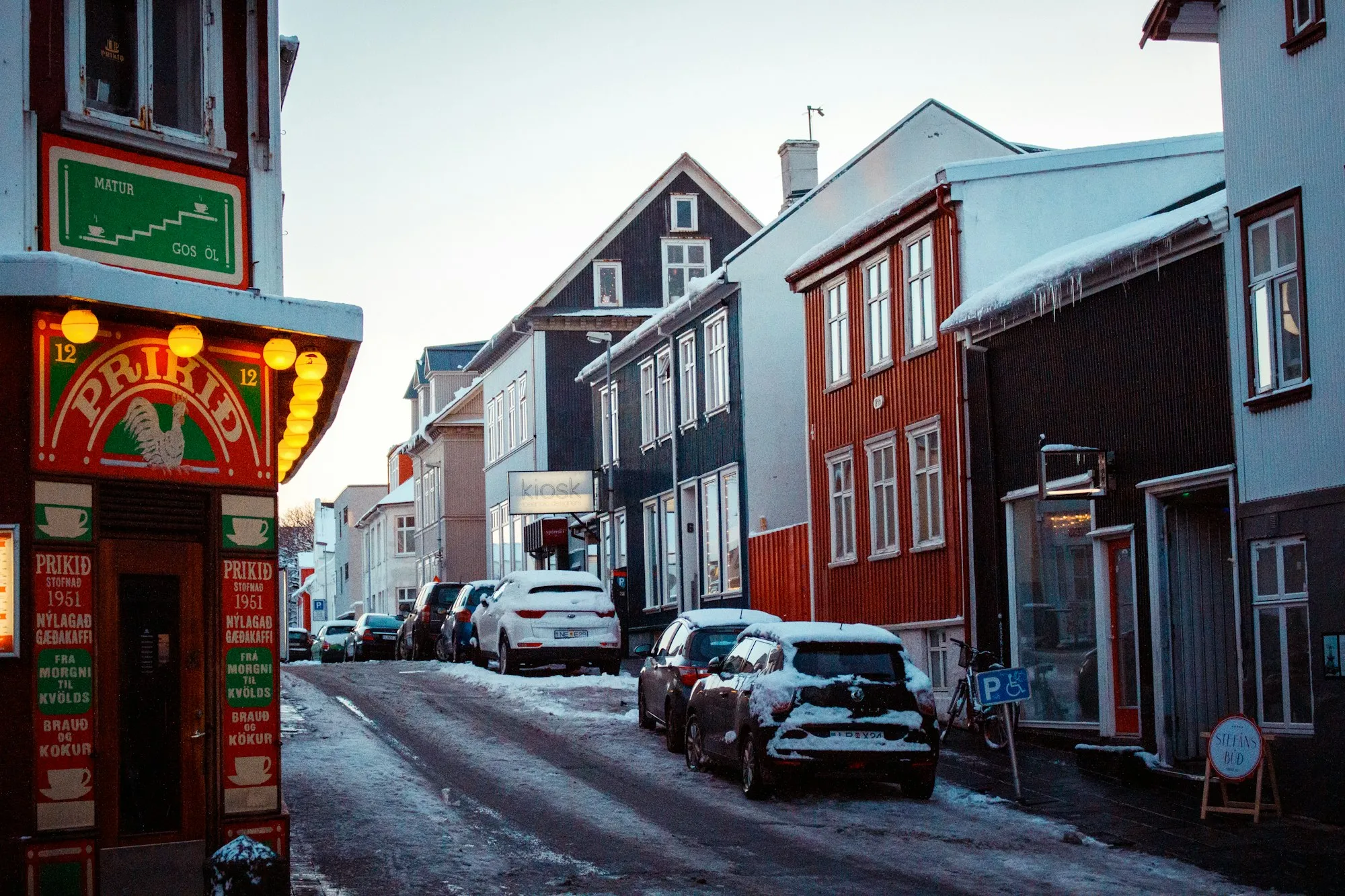
Sidewalks in Reykjavík can turn to sheet ice overnight. North Iceland’s tourist board recommends ice cleats even if you’re only staying in town, and Visit Iceland suggests them for icy trails. They slip over your boots, weigh almost nothing, and cost little.
For the waterfalls and the black beach
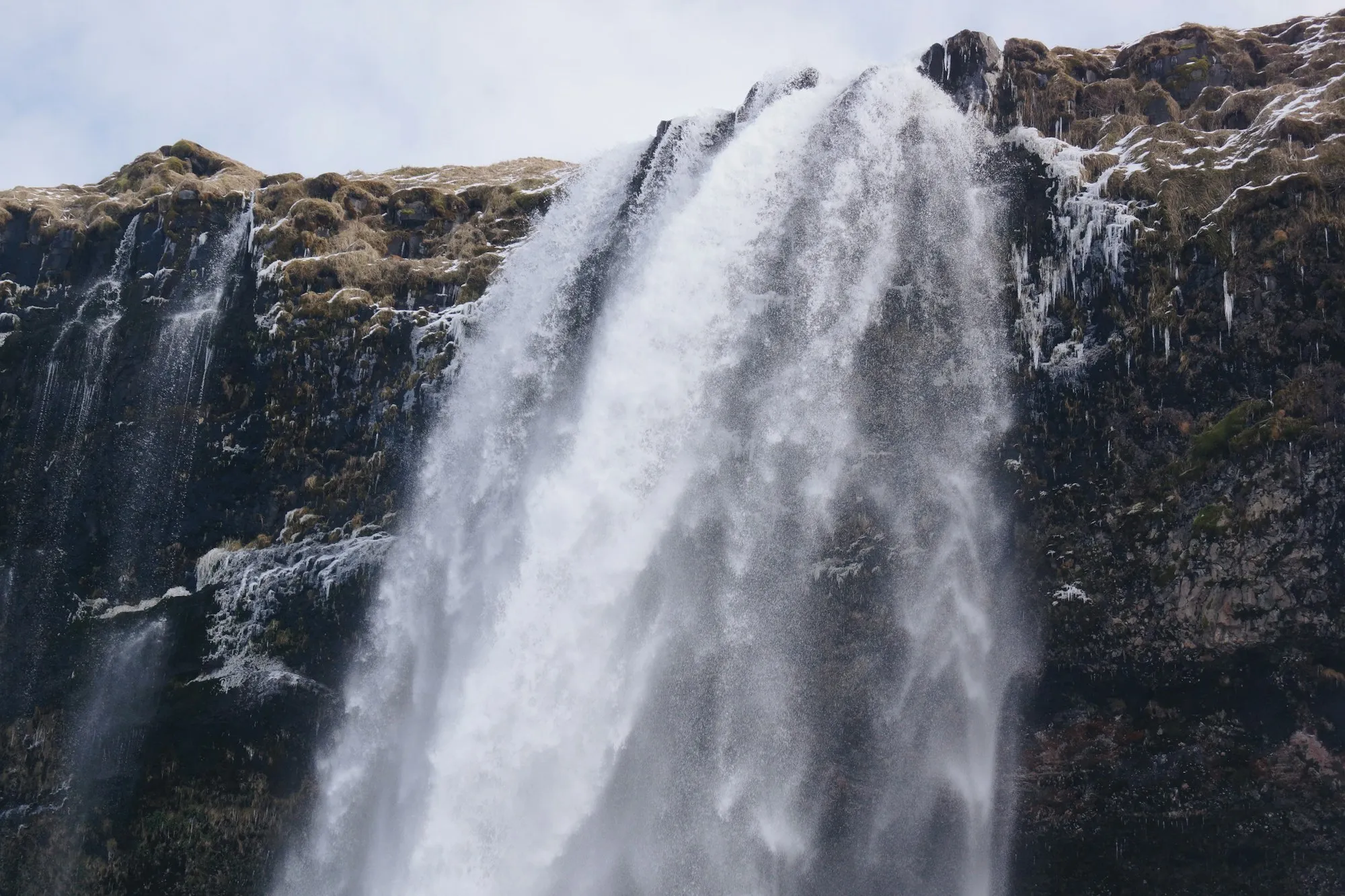
A day on the south coast means spray and wind. At Seljalandsfoss the spray carries far beyond the pool, so rain pants earn their place.
 Gigi · Unsplash
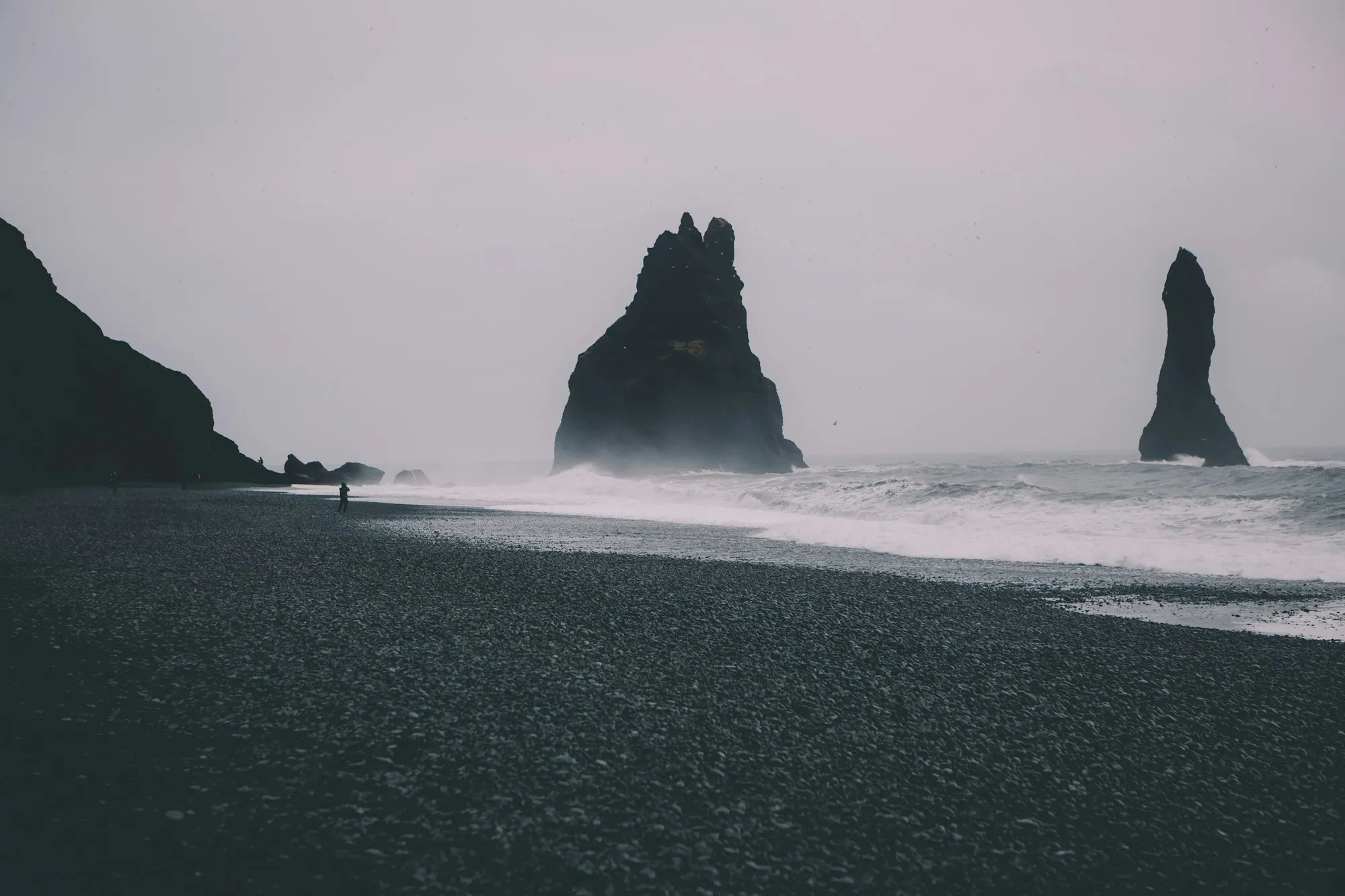
At Reynisfjara, the black sand beach near Vík, the waves are the danger, not the cold: stay well back from the water, whatever the sea looks like.
 Tim Trad · Unsplash
A swimsuit, even in December
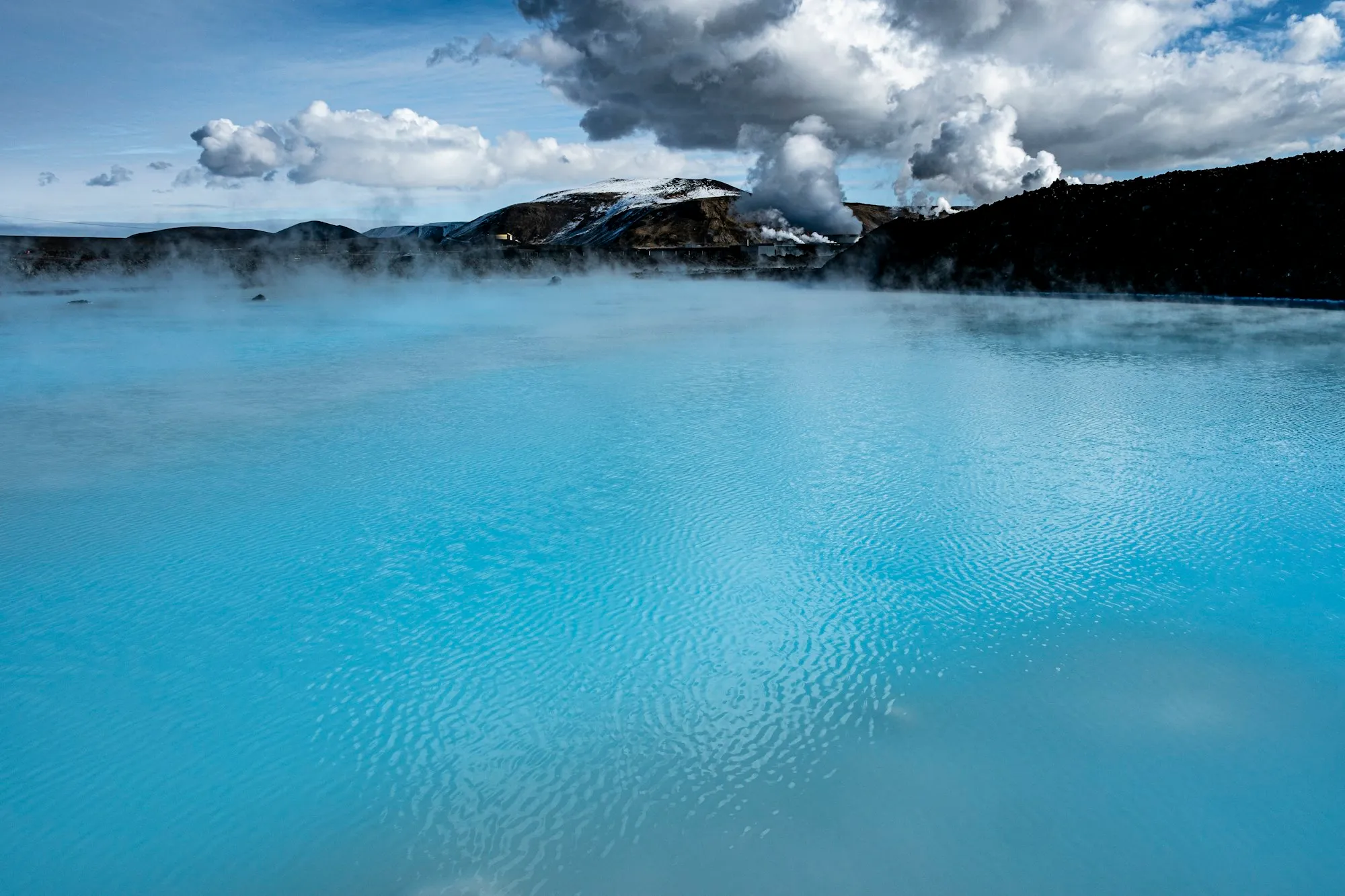
The Blue Lagoon and the geothermal pools are the best way to warm up after a cold day, and they are open all winter.
 Owen Roth · Unsplash
Everyone showers without a swimsuit before going in; it is the rule in every Icelandic pool. At the Blue Lagoon, shower gel and conditioner are free, and the Comfort and Premium tickets include a towel. The silica in the water makes hair stiff, so put conditioner in first and tie long hair up. Keep your glasses out of the water.
For the northern lights
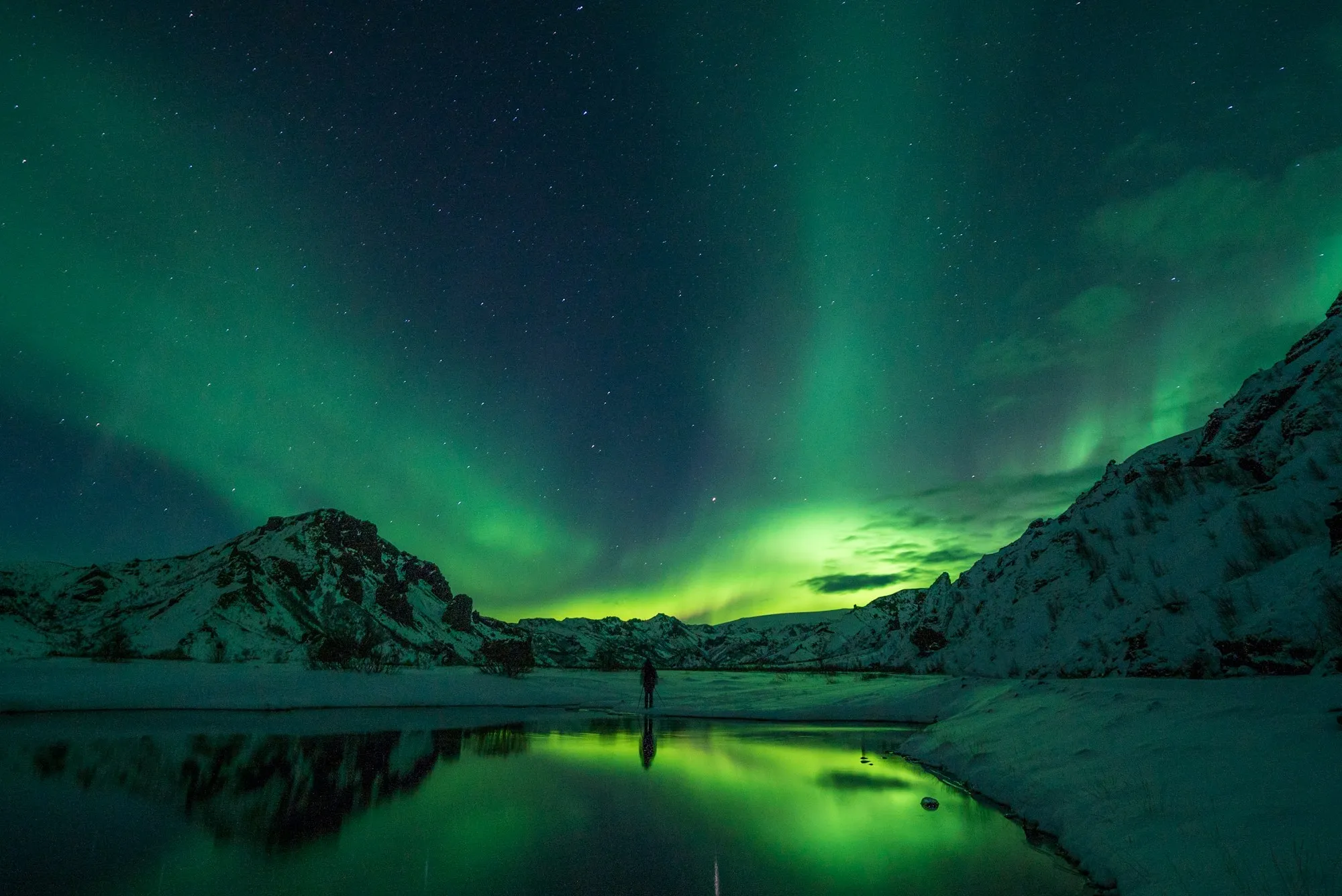
Aurora season runs from September to April, and winter gives you the longest nights. You need darkness and clear skies; the forecast at en.vedur.is shows both the cloud cover and the activity.
 Jonatan Pie · Unsplash
Waiting outside at midnight is the coldest thing you will do, so wear every layer, plus a hat, gloves, and a scarf or neck warmer. A headlamp keeps your hands free, and a small tripod helps if you want photos. If you drive out to see the lights, pull over only in a parking area, never on the road or its shoulder.
The packing list
| Item | Why |
|---|---|
| 2 sets of thermal underwear | Wool or synthetic, never cotton |
| Wool sweater or fleece | The middle layer |
| Waterproof, windproof jacket with a hood | Wind, rain, and sleet |
| Rain pants | Waterfalls, rain, snow |
| Waterproof boots with grip | Ice, slush, gravel |
| Ice cleats | Icy sidewalks and trails |
| Wool socks | One pair a day, plus a spare |
| Hat, gloves, scarf | The wind finds every gap |
| Swimsuit | The Blue Lagoon and the pools |
| Headlamp | About 4 hours of daylight in December |
| Power bank | The cold drains batteries |
| Sunglasses | Low sun on snow |
| Lip balm and moisturizer | Cold, dry air |
| Water bottle | Tap water is safe to drink |
| Plug adapter for types C and F | US plugs don’t fit |
What you don’t need to bring
- An umbrella. The wind turns it inside out. A hood does the job.
- Jeans and cotton. They stay wet.
- Much cash. Cards and contactless work almost everywhere, and tipping is not expected.
- Bottled water. Tap water is safe to drink anywhere in Iceland.
If you forget something, outdoor shops in Reykjavík sell and rent winter gear. In Traypass, the packing list builds itself from your trip’s weather and plans, and the itinerary planner lays out your days around the daylight you have.

 TraypassApp Store